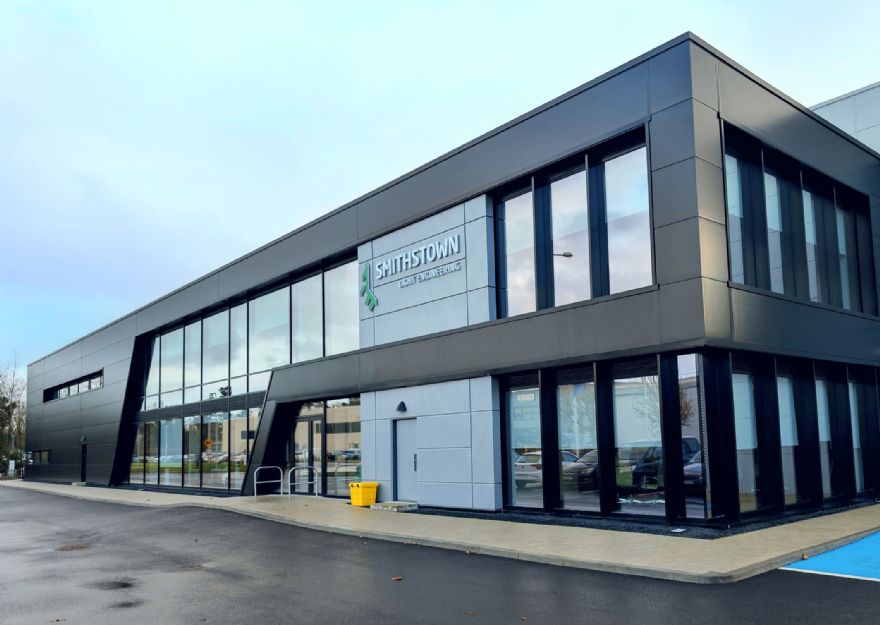
Nestled in Shannon, Ireland,
Smithstown Light Engineering Smithstown Light Engineering has undergone a significant evolution since its foundation in 1974. Established as a traditional toolmaking business by Brian King, the company has grown into a global supplier of precision medical device components, employing more than 300 people across Ireland and Poland.
At the heart of Smithstown’s next phase of growth is the
Starrag Bumotec 191neo, a machine tool that has become the cornerstone of the company’s dedicated New Product Introduction (NPI) strategy.
“Brian King was a champion toolmaker in Ireland, winning awards and building a reputation for precision and quality,” explains Mr Gerard Henn, CEO of Smithstown Light Engineering. “That customer-focused philosophy, where you could call him at 10pm with a problem, and he'd be there the next day – that's the foundation we've based everything on.”
Evolving beyond toolmakingWhen Gerard’s son Brian became Managing Director in 2011, he recognised the cyclical nature of tool making was challenging especially after the 2008 recession. Already involved in clamps, fixtures, and instrumentation for surgical procedures that provided a repeat business model, a change of direction was being surgically strategised.
“In 2018, we were still making mould tools, but the decision was clear. We exited mould tools to focus on medical device manufacturing,” Mr Henn continues.
That decision aligned Smithstown more closely with the rapidly expanding medical device cluster on Ireland’s west coast, now a major European hub hosting manufacturing operations for Stryker, Zimmer, Medtronic, Boston Scientific and DePuy.
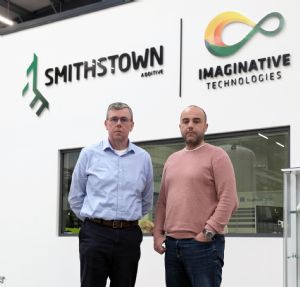 Pic left: Dr Gerard Henn CEO of Smithstown with Flavio DeCampos NPI Manufacturing Manager
 Today, approximately 90% of Smithstown’s work supports Irish-based medical operations, with the remainder split between the US and Central America. That international share continues to grow as Smithstown’s reputation for complex precision manufacturing spreads. “When there's a supplier review meeting in the US or wherever, we're often invited to bid,” notes Mr Henn. “Our name moves around based on our reputation.”
Smaller parts but bigger challengesAs medical devices have become smaller and more complex, Smithstown found that legacy manufacturing approaches were increasingly stretched. Components that were once over 100mm in size are now so small that magnification is required for inspection, while tolerances have tightened to just a few microns.
“If you look at some of the components we are making now, you literally need glasses to see them properly,” says Mr Henn. “Many require tolerances in the 3 to 5µm range on production runs, not just prototypes.”
The growing complexity of NPI activity placed increasing strain on production resources. Prototype and development work frequently interrupted manufacturing flow, with machines tied up for weeks.
“What was supposed to be two days often became four weeks with a production machine out of manufacturing for a month,” Mr Henn explains. With 10 to 15 NPI programmes running simultaneously across Shannon and Poland, something had to change.
Creating a dedicated NPI environmentSmithstown’s response was both organisational and technological. A dedicated NPI department was created, physically and operationally separated from production manufacturing. This demanded investment in a machine capable of handling the most complex geometries, multiple operations and the tightest tolerances in a single platform.
That requirement led Smithstown to the Starrag Bumotec 191neo, specified with a 60-tool changer, main turning spindle, B‑axis milling head capable of 36,000rev/min, and a retaking unit with vice.
“We needed something for all the multiple operations,” says Mr Henn. “Something that could handle very complex geometries with tight tolerances.”
Smithstown’s experienced technical team, many with more than 25 years in precision engineering, assessed the market thoroughly through exhibitions such as EMO and direct engagement with machine tool builders. Starrag emerged as a strong contender due to its reputation in high-precision sectors, existing medical device references in Ireland and the availability of a machine at the Irish Manufacturing Research centre.
Why the Bumotec 191neo?The relationship with Starrag developed over several years before Smithstown placed its order in January 2025. Mr Alexandre Gelfer of Starrag Vuadens worked closely with Smithstown during the evaluation process.
“We showed Alexandre a range of parts, and we wanted a machine that could cover most of that range,” explains Flavio DeCampos, Smithstown’s manufacturing and NPI leader.
Key to the decision was the Bumotec’s ability to integrate full 5-axis machining capability into a turning environment. “With the Bumotec 191neo, you're putting a 5-axis inside of a turning centre,” Mr DeCampos explains. “This gives you the capability to handle complex parts with the tightest of tolerances.”

The machine’s compact footprint, wide configuration options and flexibility for unknown future requirements were equally important. “We needed the Rolls‑Royce of machines for NPI work,” says Mr Henn. “We knew the first NPI machine would be the centre point for future operations.”
From bar to finished partThe first component machined on the Bumotec 191neo was for a global medical device manufacturer and immediately demonstrated the value of a single‑setup manufacturing approach.
“We'd made similar pieces on a sliding head turning centre, but this new part was far more complex,” says Mr DeCampos. “Now it's bar stock in, and the finished part out – that has to be the case with complex, tight‑tolerance components.”
The part features extremely demanding geometry, including profile tolerances of 3 to 5µm, and has already undergone nine design iterations. “There's been eight design changes in six months,” says Mr Henn. “We've been producing batches of 5,000-off through each of these iterations.”
In time, annual volumes could reach tens of millions of parts, but long validation cycles in the medical sector demand absolute process stability long before full production begins. “When it enters full production, we must have our processes 100% nailed-on,” Mr Henn adds. “The Bumotec provides us with that process stability and precision.”
Proven consistency with complexitySmithstown’s team has experience operating some of the most prestigious machine tool brands available, yet the Bumotec has stood out for its consistency under complex kinematics.
“The consistency is what stands out,” says Mr DeCampos. “Holding tight micron tolerances with all the kinematics running is an area where other machines start to lose consistency – not on the Bumotec 191neo.”
The machine currently runs two shifts, with the capability for 24‑hour operation when required. Cycle times are approximately 15 minutes per part, with further optimisation expected as experience grows.
“We're confident we could work at least 20% faster,” says Mr DeCampos, “and maybe cut cycle times by upwards of 30% when we're more experienced with the machine and strategies.”
Installation, training and ongoing development
Installation and commissioning were supported by Starrag commissioning engineer Stefan Narnhofer, who remained involved from factory acceptance through to CAM refinement.
“Stefan was phenomenal,” says Mr Henn. “He was so fastidious and dedicated.”
Training was delivered to three operators, with particular praise for the Bumotec’s intuitive HMI. “One thing that stands out is how user friendly the HMI is,” explains Mr DeCampos. “The graphic display is incredibly intuitive.”
While Smithstown is still early in its Bumotec journey, further advanced training is planned. “Bumotec is far more powerful than that,” says Mr Henn, referring to conventional machining approaches. “Users need to change their strategies and approach machining from a completely new direction.”
Securing the futureFor Smithstown, the investment in a dedicated NPI department and the Starrag Bumotec 191neo is about long-term security in one of manufacturing’s most demanding sectors.
“If we are not at the table for the next bid; if we can't handle the most complex parts our customers can envision, we're not going to be in business in five years,” concludes Mr Henn. “The Bumotec gives us that capability. It’s the Rolls‑Royce of our NPI operation, and it’s going to help us win the programmes that keep this business growing for the next 50 years.”