 Tornos France
 has demonstrated how advanced machine tools can maximise the machinability and chip control of modern lead‑free aluminium alloys, following successful trials with
Eural Gnutti's 2033 aluminium.
The project underlines the company’s focus on helping customers achieve stable, high‑precision turning performance in demanding applications, while supporting the industry’s transition towards more sustainable materials.
A subsidiary of the Swiss‑based Tornos Group, Tornos France is a long‑established specialist in bar‑turning machine tools, particularly sliding headstock lathes. With more than 140 years of experience, thousands of machines installed worldwide and operations in over 20 countries, Tornos plays a key role in high‑precision sectors including automotive, medical technology and luxury goods manufacturing.
Eural Gnutti specialises in the production of semi-finished aluminium alloy products, and is one of Europe’s largest producers of extruded bars and profiles. Its bars are particularly valued by the mechanical, automotive, aerospace, medical, electrical, electronic and defence industries, while its profiles, characterised by specific heat treatments, are intended for the automotive, pneumatic, actuator and hydraulic sectors, as well as for companies manufacturing heat sinks.
Machinability and chip controlFrom a machine tool perspective, machinability and chip management are central concerns in high‑volume precision turning. These characteristics strongly influence automation efficiency, surface quality and tool life. According to Tornos, Eural Gnutti’s lead‑free aluminium alloy 2033 aligns closely with these requirements, enabling high‑speed machining cycles while maintaining tight dimensional tolerances and stable production conditions.
The collaboration reflects a wider industry shift away from traditional leaded materials. In sectors such as luxury goods and watchmaking, manufacturers are under increasing pressure to adopt materials that meet evolving regulatory, environmental and safety requirements, particularly where skin contact is involved.
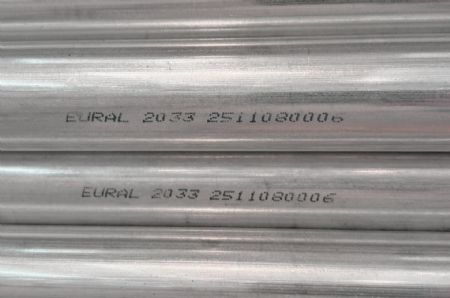
Lead‑free aluminium is emerging as a viable alternative, combining low weight and sustainability with the mechanical and aesthetic properties required for premium products.
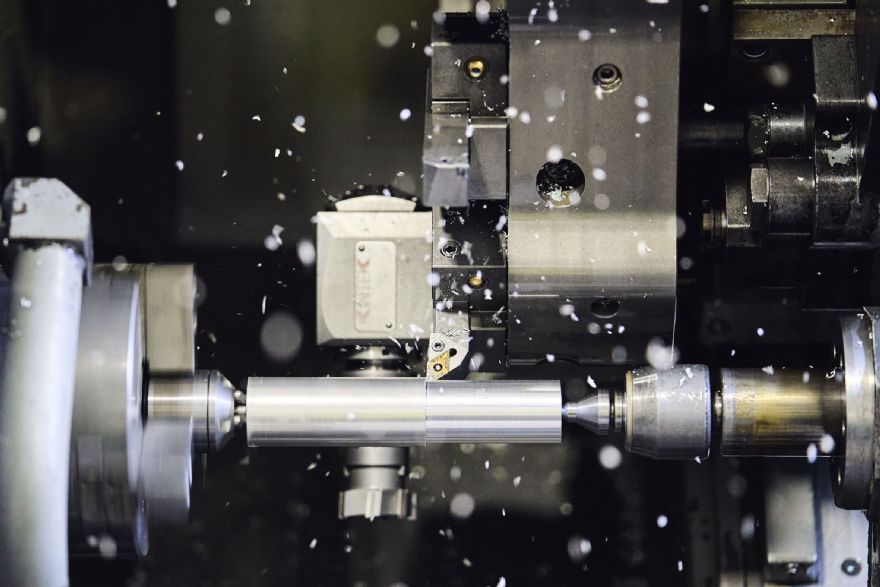
In this context, alloy 2033 stands out for its excellent chip fragmentation characteristics. Effective chip breakage is a critical factor in sliding headstock machining, where long or unstable chips can interrupt automated processes. The alloy’s predictable behaviour supports uninterrupted machining, reducing the risk of tool breakage and unplanned downtime, while helping to maintain consistent surface finishes.
Surface quality is another key consideration. In many high‑end applications, components must achieve a bright, uniform appearance suitable for decorative treatments. The trials confirmed that alloy 2033 produces surfaces well suited as a base for subsequent finishing processes, including anodising and precious‑metal coatings such as gold, silver or palladium.
Live demonstrationsThese characteristics were demonstrated publicly at the
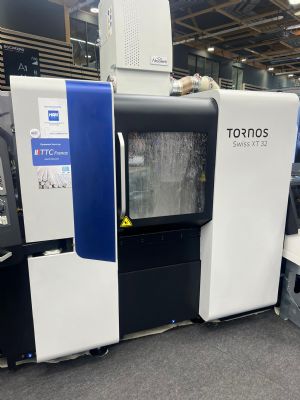
Simodec exhibition in March, where Tornos showcased the alloy in a live machining application on its Swiss XT sliding head lathe. The objective was to highlight both the machine’s performance and the alloy’s suitability for real‑world production. The chosen application was a pocket-knife designed to combine functionality with refined aesthetics, while allowing visitors to assess machining quality and final finish.
The product was conceived using a fully metal design to exploit the alloy’s properties. Unlike typical designs featuring plastic or wooden inserts, all components were produced from metal. The handle was machined entirely from Eural’s 2033 aluminium, while the blade and ferrule were made from stainless steel and the fastening screw from titanium. This approach ensured the aluminium alloy’s machinability could be assessed without compromise.
Manufacturing of the handle involved turning, milling, drilling and threading, followed by a tumbling process that delivered a particularly bright finish. The use of cutting tools normally applied to steel, combined with higher cutting speeds, further improved chip control. Tornos says that the tests confirmed excellent machinability, continuous production and high surface quality, alongside solid mechanical performance and good impact resistance.
Patrice Armeni, director of Tornos France, said: “This application has demonstrated first‑hand the potential of Tornos machines and their genuine efficiency in precision machining using a high‑performance material such as Eural Gnutti’s 2033 alloy. Although the selection of materials is not within our remit, the evidence gathered leads us to recommend this alloy to our customers.”
Sébastien Vadillo, sales manager at Eural Gnutti, added: “I would like to thank the Tornos team for their fruitful collaboration, thanks to which we were able to quickly identify the optimal parameters, confirming the value of 2033 even in new application contexts. The contribution made by Eural’s Machining Trials service, working alongside the customer, enabled us to steer the choice towards the most suitable alloy, accelerating the transition from concept to production.”
The project reinforces the importance of material‑machine compatibility. As customers adopt new materials to meet sustainability and regulatory goals.