 Lockheed Martin
 is advancing laser powder bed fusion additive manufacturing (AM) to speed up operational readiness for next generation aircraft, hypersonic systems and electric propulsion platforms, as the aerospace and defence sector looks to strengthen supply chains and compress development timelines.
High performance electronics and propulsion systems generate intense heat, making thermal management critical to reliability and mission performance. Traditionally, these thermal management components have relied on casting, forging and brazing, followed by extensive machining to meet aerospace grade tolerances. According to the company, those methods are increasingly constrained by long raw material lead times, alloy shortages, rising aftermarket demand and geopolitical disruption, creating bottlenecks across the supply chain.
Laser powder bed fusion offers an alternative by using digital, design driven processes to build metal components layer by layer directly from powder, without the need for costly tooling. Lockheed Martin says this enables production of complex, high precision parts in smaller batches, reducing development cycles and accelerating time to market while maintaining the performance and reliability required for flight critical systems.
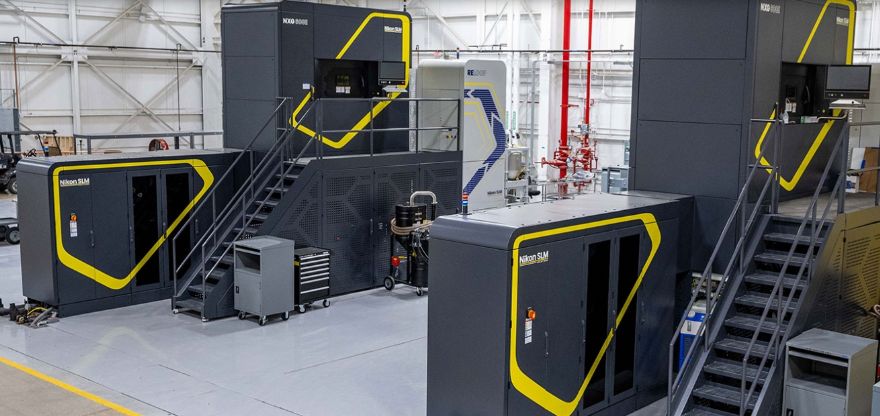
The strategy is being underpinned by significant investment in infrastructure. In 2024, Lockheed Martin’s Missiles and Fire Control facility opened a 16,000ft² additive manufacturing centre, equipped with some of the largest format, multi laser powder bed fusion machines in Texas, alongside heat treatment and inspection capabilities. The facility supports rapid development and production of additive parts for programmes across the corporation.
By maturing laser powder bed fusion processes in collaboration with specialist partners, the company is moving towards qualification and production of high performance, thin walled components designed for aerospace, defence and other high energy applications.
“Combining our laser powder bed fusion expertise with the specialised capabilities of our partners —
Sintavia,
EOS,
Nikon SLM, and nTop — has created an end to end ecosystem that accelerates design to flight timelines without compromising reliability,” said David Tatro, vice president, Operations Transformation at Lockheed Martin. “This collaborative approach positions us to meet the escalating thermal management demands of next generation aircraft, hypersonic systems and electric propulsion platforms ensuring they meet rigorous certification standards and achieve operational readiness.”
Advanced software is also playing a key role. Through its work with
nTop, Lockheed Martin is applying generative design and optimisation tools that allow engineers to explore highly complex parametric models at speed. The company reports that this approach is delivering a 15–20% reduction in overall system weight while improving heat dissipation efficiency by 10–15%, contributing to longer mission endurance, lower lifecycle costs and improved thermal performance.
“nTop enables highly complex parametric models that optimise for performance and manufacturability, which reduces the time to make decisions and iterate from months to minutes,” said Christopher Yakacki PhD, principal of Research Engineering, AMT, Lockheed Martin.
Process development has gone hand in hand with inspection and quality assurance. Working closely with EOS and Sintavia, Lockheed Martin has developed new processing windows and bespoke toolpath strategies to push feature resolution and producibility. Real time melt pool monitoring, alongside third party sensors and AI enabled analytics, allows defects to be detected early, reducing post processing inspection loads. Combined with advances in computed tomography inspection of additively manufactured parts, the approach is designed to support faster part qualification with greater confidence.
The technology is already being applied to operational programmes, including the UH 60M Black Hawk and the Precision Strike Missile. Lockheed Martin says continued integration of laser powder bed fusion will help raise production rates while improving affordability and scalability, ultimately accelerating delivery of capability to the warfighter.