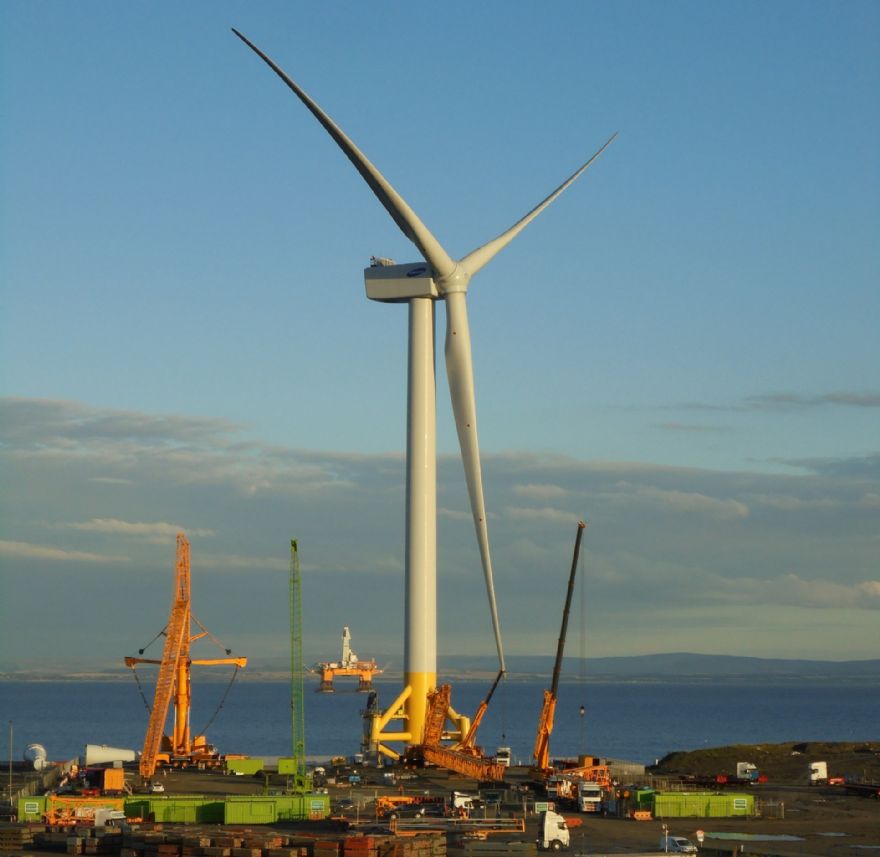
The UK could be sitting on a future ‘goldmine’ of critical materials locked inside its offshore wind turbines, according to a new engineering-led report that highlights the potential to recover large quantities of neodymium magnets and reshape domestic manufacturing supply chains.
Research published by the National Engineering Policy Centre (NEPC), led by the
Royal Academy of Engineering, finds that recycling decommissioned turbines could yield enough material to support production of up to one million electric vehicles each year. The analysis, carried out by
Warwick Manufacturing Group (WMG) at the University of Warwick, points to a significant opportunity for the UK to establish a sovereign capability in handling a critical mineral currently dominated by overseas supply.
Neodymium is widely used in high-performance permanent magnets essential for electric vehicles, aircraft systems and wind turbine generators. According to the report, a single large offshore turbine at the end of its life could yield enough recovered material to produce motors for approximately 12,000 electric vehicles, underlining the scale of the resource embedded in existing infrastructure.
Although some smaller turbines are already being retired, the study suggests commercially meaningful volumes of recovered magnets will not arrive until around 2038, when decommissioning accelerates. At that point, the UK could see an average of around one million kilograms of neodymium magnet becoming available each year. That volume would be sufficient to support motor production for around one million EVs annually, including models such as the Nissan Leaf manufactured in Sunderland.
The availability of recycled material could also bring substantial cost advantages. The report estimates that sourcing neodymium from end-of-life turbines could be more than 70% cheaper than recent import prices from global suppliers, offering manufacturers both economic and supply chain stability at a time of rising demand for electrification technologies.
Professor Joan Cordiner, chair of the NEPC Materials and Net Zero Working Group, warned that failure to act early could see the UK miss a strategic opportunity.
She said: “Future supply of neodymium magnets is not guaranteed, but the fact that the UK will have around 1,800 wind turbines installed by 2030 provides a huge opportunity to use the critical minerals within them more sustainably. However, we risk future bottlenecks in domestic manufacturing of clean tech if we don’t act now to capitalise on this strategic resource.”
As an early mover in offshore wind deployment, the UK is expected to be among the first nations to face large-scale turbine decommissioning as assets reach their 15 to 25-year design life. The report argues that developing a domestic recycling and remanufacturing capability could strengthen resilience against global shortages, particularly given the UK’s current lack of capacity to produce neodymium magnets for large turbines.
Dr Stuart Bradley, chief engineer for energy technologies at WMG, explained: “The recovery and remanufacturing of magnet assemblies from UK offshore wind turbine could unlock the commercial application of novel electrical machine designs for automotive, aerospace and alternative renewable energy sources like tidal, that have suffered from fragile and volatile supply chains. This bonanza offers UK manufacturers an opportunity for significant cost-reduction and supply chain stability.”
However, the NEPC emphasises that a coordinated approach will be required to secure these benefits. It calls for turbines to be designed with easier disassembly and magnet recovery in mind, alongside investment in port infrastructure to handle decommissioning at scale. Trade policy and regulation will also play a role in ensuring recovered materials remain within the UK and are channelled into clean energy and manufacturing sectors.