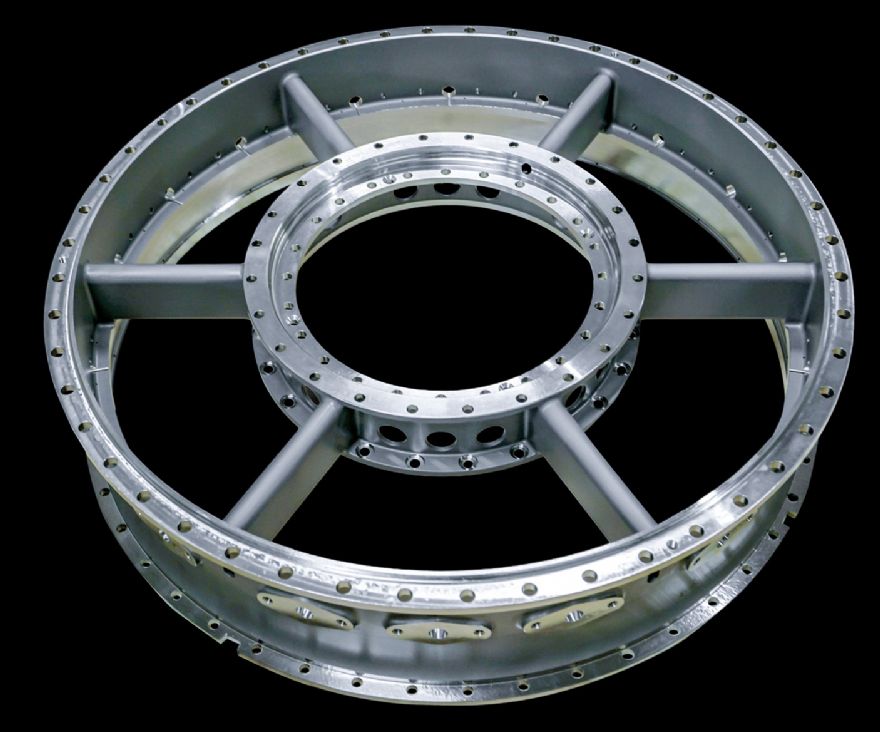
 At the Aerospace & Turbine Competence Centre (ATCC) in Rorschacherberg, Switzerland, Starrag has developed tests that optimise complex machining processes.
Recently, the facility began manufacturing casings for mobile gas turbines under a contract with an American customer. For
Starrag, this was essentially an R&D project.
For many decades, Starrag has built process expertise in turbine manufacturing at its headquarters in Rorschacherberg, knowledge that the aviation and energy industries worldwide have put to good use.
Klaus Struebel, Starrag’s sales director for Asia Pacific and a turbine expert, explained: “Most customers don’t just want our premium machines. They purchase them as part of functional, efficient processes – often integrated into complete manufacturing systems. This requires up-to-date process expertise at all times."
Learning by doingAccording to Dr Markus Ess, director of technology at the Starrag Business Unit HPS, the US casing order had a special background. He said: “We are not actually a part supplier, even though we already had experience in casing manufacturing. However, since the scope of the contract covered the entire process chain – from unmachined parts to housing components ready for assembly – we saw this as an opportunity to expand and improve our process expertise, especially as our customers are increasingly seeking this extensive knowledge.”
The customer also recognised that Starrag in this case was not a traditional supplier. The request was made out of necessity because small-batch production was no longer economically viable from a previous supplier, and no other service provider with the necessary expertise and machinery could be found.
Starrag, on the other hand, was able to use its ATCC facility in Rorschacherberg for most of the work, as it offered ideal conditions for machining casings. Covering approximately 2,000m², the facility is equipped with the latest four and five-axis Starrag machining centres. In addition, experienced application specialists and developers are on-site.
"From an economic perspective, it was an advantage, as we don’t have to invest in new machines for the contract," says Markus Ess. "For the casings, we used the STC 1250MT and STC 800MT machines available at the ATCC, which are suitable for cutting and turning, depending on the casing size and requirements."
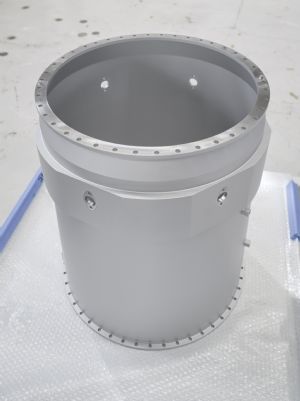
Casing manufacturing capability Gas turbines typically consist of several stages. This includes the air inlet, the compressor (usually a multi-stage unit), the combustion chamber, the turbine, which converts the thermal energy of the hot gases into mechanical or electrical energy, and the exhaust. This is also the case with the smaller casings, which require six different casing components for their housing. The newer generation, as in this case, also included an additional casing.
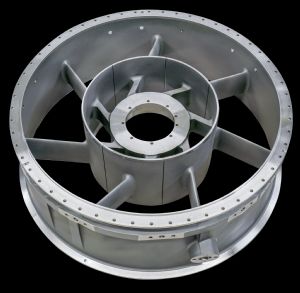
Each of the rotationally symmetric casings must meet different requirements and varies in size and geometry. The materials also vary depending on the prevailing temperatures. For example, titanium is used in the cold section, while Inconel is used in the hot section at up to 2,000°C.
Under the contract, Starrag had to manufacture the gas turbine housing components and ship them to the United States as shipsets. A ‘shipset’ refers to a complete set of casings for a turbine, and ten shipsets were delivered in 2025.
“We agreed on two deliveries, each consisting of five shipsets," Mr Struebel says. "For us, this meant that we manufactured each of the seven different casings in batches of five, thereby keeping setup and heat treatment costs to a minimum.”
Nevertheless, sophisticated production planning was required to consider machine utilisation and the supporting processes.
"In this case, we were responsible not only for turning, cutting, and drilling operations, but also for additional EDM and welding work, heat treatments, and measurement and testing processes," explains Mr Ess, head of technology. "It was precisely this knowledge of the process chains that we generated that was so valuable to us."
Short preparation timeOnly six months were available for technology development. Not long, given the wide variety of casings, each with very different requirements. The materials were difficult to machine with limited access to certain features, such as holes. To position attachments such as blades with precision, tight tolerances had to be maintained, and a high degree of surface finish achieved.
In addition to machining on Starrag machines, supplementary work was needed. Pressure tests were required for deep-hole drilling. Welding, EDM, heat treatment, hardening, and Cerakote coating were outsourced to certified partners, as was Fluorescent Penetrant Inspection (FPI).
Mr Ess notes: "Many of these operations are intermediate processes that occur outside our direct control and interrupt the in-house process. However, our experienced staff implemented a well-functioning process chain and completed the order to our client’s satisfaction."
Mr Struebel adds: "Since our client is based in the United States, we developed a comprehensive project management system that includes weekly online meetings to discuss and monitor progress. This kept the customer informed on how the work was progressing and whether we were on schedule."
One-time costsTechnological development was also constrained by economics, as Starrag didn't just want to gain expertise. One-off costs were a major factor, and the clamping device was among them.
Stanislav Stankevich, senior application engineer, explains: “We had originally planned to use four different devices, but that would have made the project uneconomical. That’s why we came up with an innovative, modular clamping concept – a combination fixture that allows us to clamp all seven housing types using a single device."
For this purpose, a matrix was marked on the pallet to specify the clamping positions for each casing. In this process, the same grooves are always used, but different standard vertical clamping elements are employed. This allows an experienced operator to reconfigure the device quickly.
Further in-house developments were necessary to ensure efficient machining. Mr Stankevich, who has extensive expertise in the field of casings, was responsible for overseeing the process and the tools, as well as optimising the equipment.
He says: “To enable drilling and machining hard-to-reach areas, our experts developed extra-slim angle heads that feature a special interface providing exceptional rigidity for heavy-duty cutting."
Carbide milling cutters developed and ground in-house contributed to optimised machining performance, and other tools such as deep-hole drills and reverse countersinks also originated from Starrag’s own R&D department.
At the end of the manufacturing process, each part was marked with a serial number in accordance with regulations. Bolts, pins, T-nuts, and supplied components were also installed.
The shipset was then placed in the reusable packaging in which the blanks were delivered. The casing set was then shipped to the United States, where the turbines were fully assembled and tested.