 Solukon Maschinenbau
 has launched SPR-Pathfinder PRO, a new high-performance version of its intelligent depowdering software designed to support increasingly complex laser powder bed fusion (LPBF) components.
The German additive manufacturing post-processing specialist says the latest software has been developed in response to growing demand from industrial users producing parts with intricate internal channels, dense lattice structures and advanced thermal management features.
Alongside the new PRO version, the company has also introduced SPR-Pathfinder BASIC, a more affordable option aimed at components with moderate levels of complexity.
SPR-Pathfinder software uses CAD data and a digital twin of the part to automatically calculate the optimum motion sequence required to remove unfused powder from internal features during the depowdering process. The software is compatible with Solukon's SFM-AT350, SFM-AT350-E, SFM-AT800-S, SFM-AT1000-S and SFM-AT1500-S depowdering systems and can be operated on a standard Windows-based computer or server.
According to Solukon, the introduction of the PRO version reflects a growing industry focus on depowderability as a key factor in the successful industrialisation of additively manufactured metal components.
As LPBF designs become more sophisticated, manufacturers are placing greater emphasis not only on whether a part can be printed, but also on whether residual powder can be removed reliably and repeatably from internal structures. Solukon believes this has become a critical requirement for sectors such as aerospace, energy and advanced engineering, where component complexity continues to increase.
The company says one of the main drivers behind the development of SPR-Pathfinder PRO was the need to address geometries that exceed the capabilities of previous simulation limits. Components such as advanced cooling systems and multi-channel aerospace structures require significantly greater simulation resolution to ensure accurate automated depowdering.
The new software supports up to one million particles during simulation, representing a 20-fold increase over the standard version, while previous voxel limitations have been removed entirely. Solukon says this enables accurate analysis of sub-millimetre channels and highly complex internal features that were previously difficult to simulate.
Another focus has been the need for greater process transparency. As additive manufacturing moves towards serial production, manufacturers require detailed traceability throughout the production chain to demonstrate repeatability, understand process deviations and satisfy customer and certification requirements.
The enhanced capabilities of SPR-Pathfinder PRO complement Solukon's Digital Factory Tool, which records depowdering process data and can integrate information into higher-level digital manufacturing systems via OPC UA connectivity.
A third development objective was to strengthen what Solukon calls "Design for Depowdering". While Design for Additive Manufacturing (DfAM) principles are widely adopted to ensure components can be printed successfully, the company argues that equal consideration should be given to how powder will be removed after production.
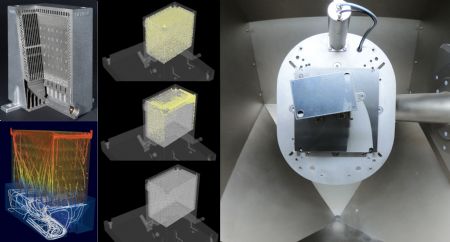
By incorporating depowdering considerations at the design stage, engineers can identify potential powder traps and problematic internal geometries before manufacturing begins, reducing development cycles and improving production predictability.
Andreas Hartmann, CEO and CTO of Solukon, said: "At Solukon, we have always believed that reliable and intelligent automated depowdering can be achieved when machine, process, and software are aligned.
"The parts our customers print today are more complex than ever and we have grown alongside that ambition. SPR-Pathfinder PRO reflects years of listening to the market and advancing our software in step with the most demanding AM applications: parts with sub-millimetre channels, densely packed internal surfaces, and geometries previously inaccessible."
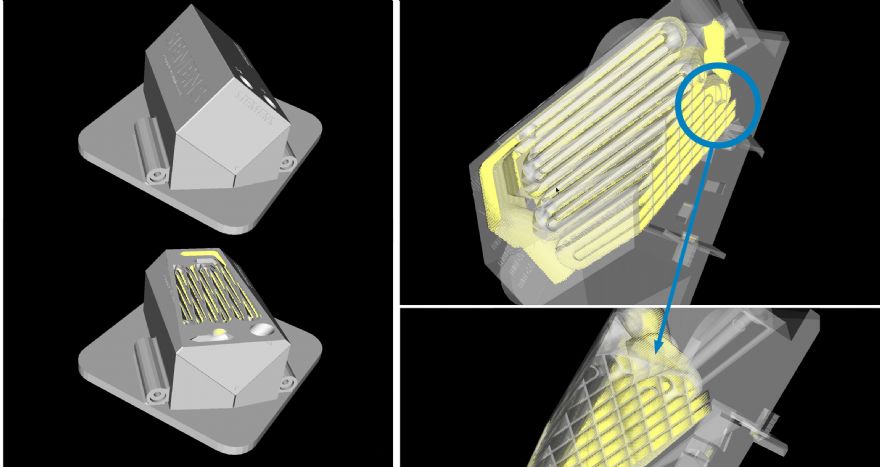
Among the key new features is a cross-sectional inspection function that provides users with visibility throughout the component in X, Y and Z planes. Operators can adjust part transparency and examine internal structures from multiple angles, helping to identify powder traps and flow restrictions before production begins.
The software also introduces accurate process-time prediction. Solukon says users can now estimate both calculation times and depowdering durations, enabling more effective production planning and helping manufacturers eliminate scheduling uncertainties that can become increasingly costly as output volumes rise.
Hemank Raj, Product Owner for SPR-Pathfinder, said: "SPR-Pathfinder PRO is the result of working closely with operators who push LPBF to its limits every day.
"The standard version already removes the guesswork from depowdering programme creation. With PRO, we go further: users can now look inside the most complex geometries, predict process time with confidence, and validate depowderability before the first layer is printed. That changes how engineers think about post-processing from the very start of a project."
Solukon says SPR-Pathfinder BASIC will continue to provide automated cleaning programme generation for moderately complex components, offering a cost-effective entry point for users that do not require advanced simulation capabilities. The new PRO version, meanwhile, is targeted at manufacturers producing highly complex parts where maximum simulation depth, process transparency and production planning accuracy are critical requirements.