The UK’s
Submarine Delivery Group (SDG) is deploying advanced manufacturing techniques, including additive manufacturing, to improve the availability and readiness of the Royal Navy’s submarine fleet.
Part of the wider Defence Nuclear Enterprise, the SDG has established a dedicated additive manufacturing team to help address longstanding challenges associated with sourcing replacement components for submarines. By working closely with industry partners, including
QinetiQ, and the Royal Navy, the initiative is aimed at reducing reliance on complex, and often slow, traditional supply chains.
Advanced manufacturing encompasses a range of modern production methods, including automation and artificial intelligence, but it is additive manufacturing that is playing a central role. The process enables components to be built layer by layer from digital designs, allowing complex parts to be produced more quickly and with less material waste than conventional machining.
In submarine support, this capability is particularly valuable. Replacement parts can be difficult to source, especially where components are obsolete or no longer commercially available within operational timescales. By creating digital replicas using handheld scanners and producing parts in materials such as stainless steel, engineers can manufacture bespoke components on demand.
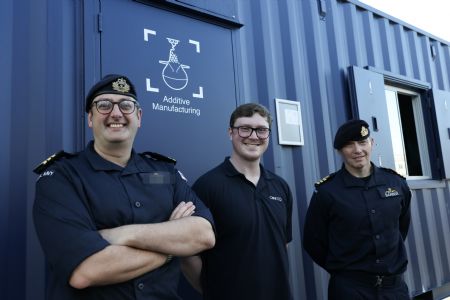
The AdM team, created in February 2024 within the SDG’s Platform Equipment Delivery Team, has been tasked with applying these technologies to improve submarine availability across both in-service vessels and build programmes. A key element of its work is the Market Access Cell, which responds to demand signals from vessels when parts cannot be sourced or lead times are excessive, identifying and delivering suitable manufacturing solutions at pace.
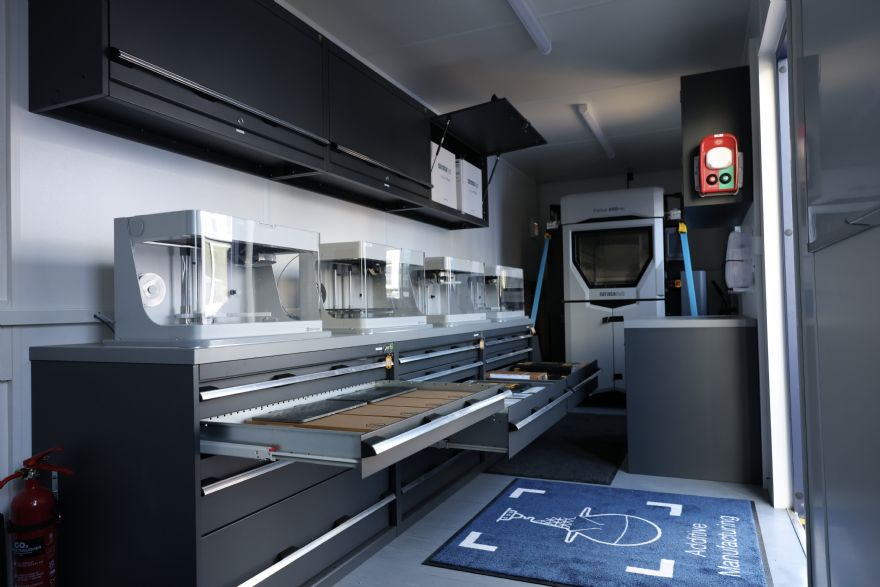
A significant step forward has been the deployment of containerised additive manufacturing facilities at HM Naval Base Clyde. The units, designed by QinetiQ, provide on-site metal printing, scanning equipment and engineering workspace, enabling parts to be produced close to the point of need. QinetiQ staff will initially operate the facility alongside Royal Navy personnel and the Submarine Flotilla Engineering Support Group, while ship’s staff are being trained to use the equipment directly.
Max, a Royal Navy Commander and SDG additive manufacturing lead, said: “This capability enhances our capacity to return submarines to service faster, directly supporting operational readiness. By enabling engineers to produce components on-site, we are reducing dependence on complex supply chains and accelerating repair timelines.”
The initiative also supports the Submarine Maintenance Recovery Plan, launched in January 2026 by First Sea Lord General Sir Gwyn Jenkins. He described the arrival of deployable workshops as “a step forward” in strengthening the underwater fleet, adding that the technology has the potential to cut time spent alongside and increase availability.
Beyond the UK, additive manufacturing is being integrated into the AUKUS partnership, with collaboration under way between the UK, US and Australia to establish common standards that allow components to be shared and certified across allied fleets. This approach was demonstrated earlier in 2026 in Australia, where additively manufactured parts were approved for use on HMS Anson.
Looking ahead, the SDG aims to embed additive manufacturing as a routine part of submarine support, with ambitions to qualify more complex components, optimise designs digitally and incorporate recycling of materials from decommissioned vessels.
Max added: “Additive manufacturing is not a silver bullet, but it is another option that will only become more capable over time.”