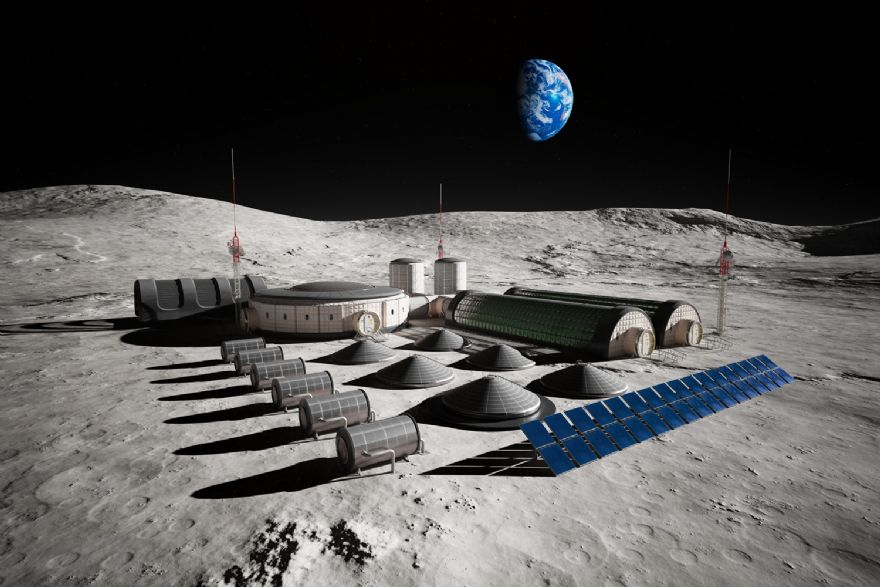
Harlette Capital has launched a Request for Information (RFI) aimed at exploring the development of a compact nuclear power system for future lunar operations, seeking input from leading nuclear technology companies and research organisations.
Announced on 29 July, the Alpha Lunar Small Modular Reactor (SMR) programme is intended to investigate the feasibility of a micro nuclear reactor capable of supporting long-duration activity on the Moon, including scientific research, communications, robotics, infrastructure and future human missions.
Harlette Capital is a London-based company associated with the Harlette luxury fashion brand that has recently published proposals and research initiatives in the space and advanced technology sectors.
It says the SMR initiative will focus on compact nuclear power systems incorporating hydrogen-based technologies, with the goal of delivering reliable energy generation for sustained lunar operations.
As part of the early-stage market engagement exercise, Harlette Capital has invited major SMR developers, including Rolls-Royce SMR and Westinghouse Electric Company, to participate in technical discussions and provide information on technologies that could support future lunar power generation.
The RFI follows the company's participation in the International Conference on Topical Issues in Nuclear Installation Safety, held at the
International Atomic Energy Agency (IAEA) headquarters in Vienna from 29 June to 3 July. The event brought together experts from across the global nuclear industry to discuss safety, innovation and emerging technologies.
Harlette Capital also cited its involvement in a joint meeting organised by the United Nations Office for Outer Space Affairs (UNOOSA) and the IAEA in Vienna on 9 June, which examined cooperation between the nuclear and space sectors as interest in future lunar and deep-space exploration continues to grow.
The Alpha Lunar programme aims to assess technologies capable of delivering lightweight and compact lunar power systems, continuous energy generation for permanent operations, and the integration of advanced hydrogen technologies where technically feasible. Other areas of interest include safe deployment concepts for international lunar missions and long-duration power systems for communications networks, scientific equipment and critical infrastructure.
The company believes nuclear power will play a key role in enabling future commercial and scientific activities beyond Earth, where dependable energy supplies will be required in environments that experience prolonged periods without sunlight.
The RFI seeks responses from organisations with expertise in areas including small modular reactors, microreactor technologies, nuclear safety engineering, hydrogen energy systems, space nuclear power, advanced materials, thermal management, radiation shielding, autonomous energy systems and lunar infrastructure.
Harlette Capital said information gathered through the consultation process will help shape future programme planning, technology partnerships and potential research collaborations associated with the Alpha Lunar initiative.
Harlette DeFalaise, founder of Harlette Capital, said: “Reliable, compact nuclear power has the potential to become one of the foundational technologies enabling humanity's long-term presence on the Moon.
“Through the Alpha Lunar Request for Information, Harlette Capital is engaging with world-leading innovators to better understand how advanced microreactor and hydrogen technologies may contribute to future lunar infrastructure in a safe and responsible manner. We look forward to constructive engagement with industry, research organisations and international partners.”
While still at the concept and information-gathering stage, the initiative reflects growing international interest in developing nuclear energy systems capable of supporting future lunar exploration programmes and the infrastructure required for a long-term human presence beyond Earth.
Pic: Shutterstock