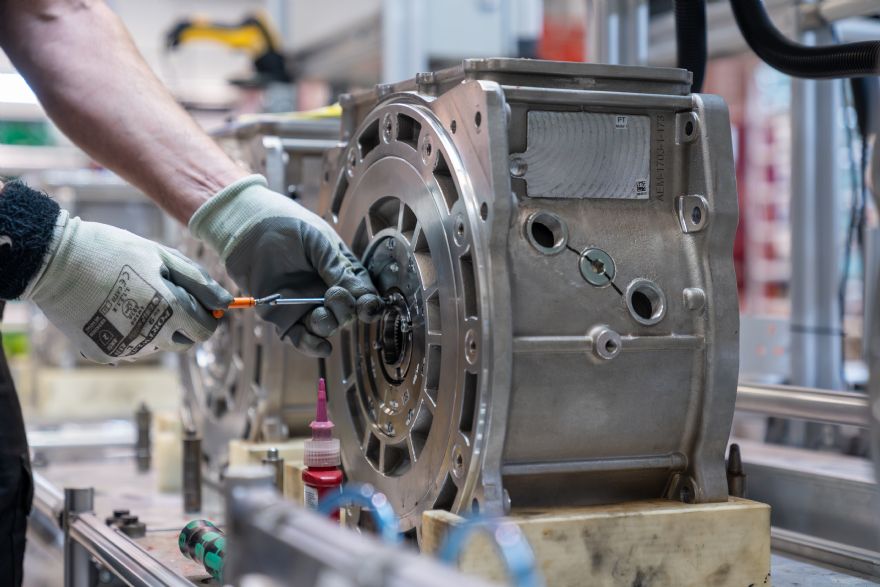
A British manufacturer of rare earth-free electric motors is calling on Chancellor John Healey to use the Autumn Budget on 28 October to back technologies that eliminate the UK's need for critical minerals. The company says British industry will be stronger when it no longer relies on them at all, not simply when it has more places to buy them from.
Advanced Electric Machines (AEM), based in Washington in the Northeast, welcomed the Government's recent Critical Minerals Strategy but said it does not go far enough. The strategy aims to meet 10% of UK demand through domestic production and 20% through recycling by 2035. AEM's view is that sourcing, diversifying and recycling the same materials makes supply more resilient, but leaves the underlying dependency exactly where it is.
Instead, AEM wants the Budget to create a Critical Materials Independence Programme, a dedicated national programme to take British technologies that remove critical minerals from products through research, scale-up and into volume manufacturing in the UK. Current Government funding, including the £50 million Critical Minerals Programme announced in June, is focused on securing, processing and recycling the minerals themselves. AEM argues there should be matching ambition for the technologies that make them unnecessary.
Dr James Widmer, CEO of AEM, said: "The Government is right to treat critical minerals as a question of national security. But recycled rare earths are still rare earths, and a supply we have secured today can be withdrawn tomorrow by a decision made somewhere else. We have shown that an electric motor can be built without rare earths and run in commercial service. Most of British industry is not there yet. The Budget is the moment to help the rest of the supply chain make the same move, rather than keep managing a problem it could design out."
AEM says the programme would do more than protect supply chains. By helping manufacturers across automotive, energy and defence design critical minerals out of their products, it would anchor manufacturing and skilled jobs in regions like the Northeast. In turn, it would give added substance to the Chancellor's commitment that this Budget will move money and power out of Westminster and into every part of the country. The move could also ensure that technologies invented in Britain are manufactured in Britain, at a time when the EU is debating "Made in Europe" rules that could favour production inside the bloc.
Mr Widmer added: "Every part of the world is now deciding which technologies it wants to own. If Britain only funds access to the same materials everyone else is chasing, we are competing on someone else's terms. If we fund the technology that removes the need for them, we set the terms."
AEM is clear that it is not asking for money for itself. The company is privately backed and its motors are already in production and in frontline service. Last month it launched Titan, its largest rare earth-free heavy-duty motor, at IAA Transportation in Hanover. The purpose of the programme, AEM says, is to bring the rest of British industry with it, so that designing out critical minerals becomes standard practice across UK manufacturing rather than the work of a handful of companies.
Mr Widmer concluded: "We are not waiting for the Budget to do this. We are already doing it. What one company proves, a national programme can turn into an industrial advantage for the whole country. We want to help lead that, working alongside Government, suppliers and manufacturers who want to build products Britain controls from the ground up."