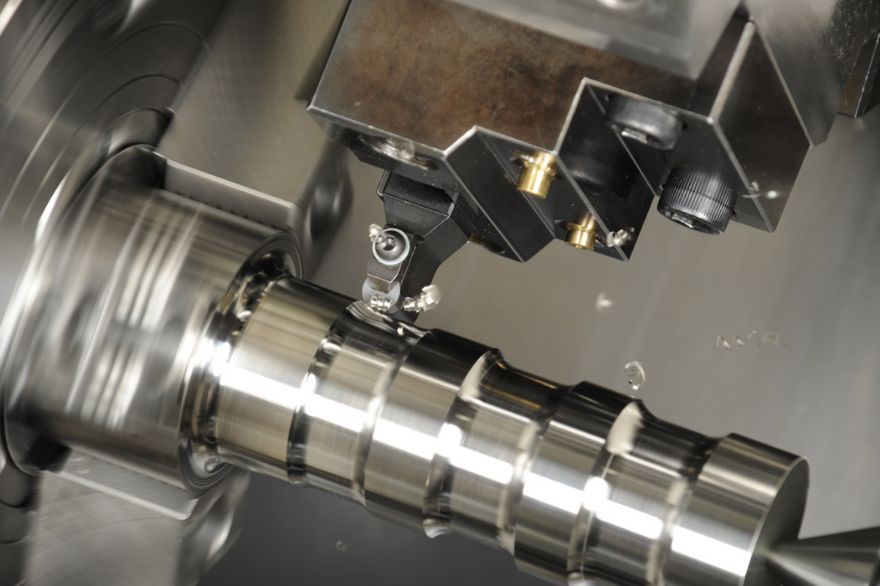
 In this article NTK Cutting Tools discusses the specific properties found and strategies required when machining with ceramic inserts.
For manufacturers accustomed to carbide tooling, ceramic inserts can appear counterintuitive. Yet when applied correctly, they can transform productivity in heat-resistant superalloys and cast irons. The challenge is not usually the tooling itself, but overcoming long-established machining habits.
For most machinists, one rule has been reinforced throughout their careers: when problems arise, reduce the cutting speed.
If a cutting edge wears too quickly, slow it down. If the process becomes unstable, slow it down. If insert failure starts to appear, slow it down.
In conventional carbide machining, that logic often makes perfect sense. Lower speeds can reduce heat generation, improve stability and extend tool life.
The problem is that ceramic tooling operates according to a completely different set of principles.
This often becomes apparent during a manufacturer's first ceramic machining trial. An application engineer arrives to recommend ceramic inserts for a demanding roughing operation, perhaps on a nickel-based aerospace alloy. The advice appears startling: increase cutting speed from around 250m/min to 900m/min or even higher.
The reaction is predictable. The operator looks at the machine, looks at the insert, and wonders whether the recommendation can possibly be correct.
After years of machining with carbide, the idea of increasing cutting speed by such a large margin feels risky. Higher speed usually means more heat, more wear and greater potential for problems.
As a result, many users take what seems to be the sensible route. Instead of the recommended cutting speed, they choose a more conservative value.
Unfortunately, this cautious approach is often the reason ceramic machining trials fail before they have properly begun.
A different relationship with heatTo understand why ceramic tooling behaves differently, it is necessary to understand the role heat plays in the machining process.
In carbide machining, heat is generally viewed as an enemy. Excessive temperatures accelerate wear mechanisms and shorten tool life. Much of the process optimisation effort focuses on controlling thermal loads and preventing excessive heat build-up.
Ceramic machining, particularly when applied to heat-resistant superalloys and cast irons, turns that thinking on its head.
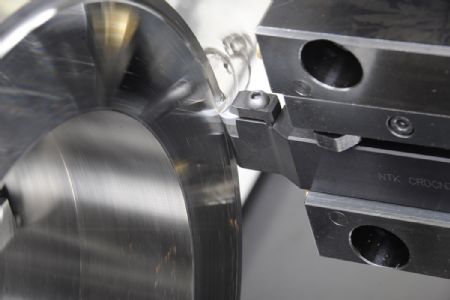
Nickel-based superalloys such as Inconel 718 are notoriously difficult to machine because they retain their strength at elevated temperatures. At room temperature, these materials resist deformation and place significant loads on the cutting edge.
However, as temperatures increase, the material begins to soften. At temperatures approaching 800°C, resistance to deformation reduces significantly, making the alloy easier to cut.
At the same time, ceramic cutting materials retain exceptional hardness and wear resistance at temperatures that would rapidly degrade conventional carbide grades.
This creates an unusual but highly advantageous situation. As temperatures rise in the cutting zone, the workpiece becomes easier to machine while the cutting tool remains capable of withstanding the thermal load.
The result is reduced cutting forces, increased material removal rates and significantly improved productivity.
This is why recommended cutting speeds for ceramic inserts often seem surprisingly aggressive. The objective is not simply to remove material faster. The objective is to create the thermal conditions that allow the technology to perform as intended.
When users fail to generate sufficient heat because they reduce cutting speed, they often prevent the process from reaching its optimum operating window.
Why playing safe can be costlyWhile the theory is relatively straightforward, putting it into practice on the shop floor can be more challenging.
Many manufacturers introducing ceramic tooling for the first time struggle to overcome decades of experience with carbide. The instinct to reduce cutting speed during an initial trial is understandable. It feels like a sensible precaution designed to protect the tooling and the machine. In reality, the opposite often happens.
At lower cutting speeds, the cutting zone may never achieve the temperatures required for thermal softening of the workpiece material. As a result, the material remains difficult to machine, cutting forces remain high and wear can increase.
The process then delivers neither the expected productivity gains nor the anticipated improvements in tool life.
This can lead users to conclude that ceramic tooling is unsuitable for their application, when in fact the technology was never allowed to operate under the conditions for which it was designed.
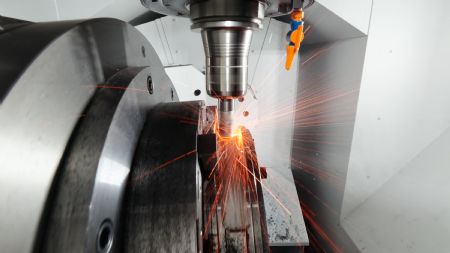
Industrial experience has repeatedly shown that increasing cutting speed can sometimes reduce wear while dramatically improving productivity. In rough milling applications on materials such as Inconel 718, moving from cutting speeds of approximately 400m/min to more than 1,000m/min has delivered substantial reductions in machining time while maintaining acceptable tool life.
For manufacturers making the transition from carbide to ceramics, these results can be surprising. Yet they underline a critical point: ceramic machining is not simply carbide machining performed with a different insert grade. It is an entirely different cutting technology.
That does not mean success is achieved simply by increasing spindle speed and hoping for the best. Process stability remains essential. Secure workholding, rigid toolholding, minimal tool overhang and vibration-free machining conditions all contribute significantly to performance.
In milling applications, smooth toolpaths and reduced interruptions help minimise impact loading on the cutting edge. In turning operations, consistent engagement and stable cutting conditions allow ceramic grades to deliver their full potential.
Coolant strategy also requires careful consideration. Ceramic milling operations are frequently performed dry because the high temperatures generated during cutting form an integral part of the process. Intermittent coolant application can induce thermal shock, leading to edge damage or premature insert failure.
Turning applications can be different. Because the cutting edge remains continuously engaged, coolant can often be applied successfully without creating the repeated heating and cooling cycles associated with milling.
Ultimately, the greatest challenge in ceramic machining is not usually the machine tool, the insert or even the workpiece material. It is changing habits developed through years of successful carbide machining.
One of the most common misconceptions is viewing ceramic inserts as simply another carbide grade. They are not. Ceramic tooling has been developed to operate within a completely different performance window and according to different machining principles.
For manufacturers tackling heat-resistant superalloys and cast irons, embracing that difference can unlock productivity levels that conventional carbide tooling often struggles to achieve.
The next time a ceramic cutting speed recommendation appears unexpectedly high, it is worth remembering that the value has not been selected merely because the insert can survive it. More often than not, it is because that is precisely where the technology begins to work.