The
Confederation of British Metalforming (CBM) says the UK must intensify its efforts to secure a closer relationship with the European Union or risk leaving domestic manufacturers at a growing disadvantage in the rapidly changing industrial landscape.
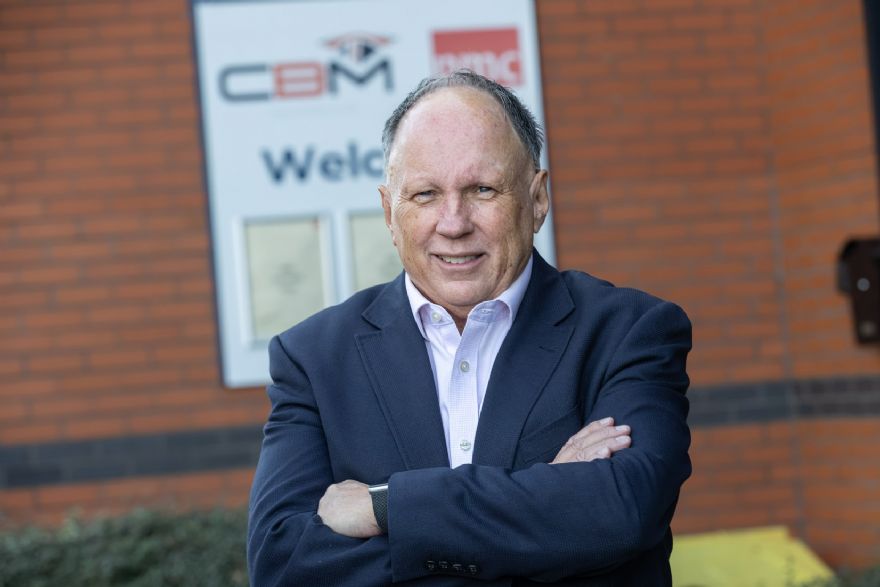
Stephen Morley (pictured), president of the confederation and chair of the
Euroforge Automotive Sector, made the rallying call when he addressed the autumn meeting in Munich.
The former auto veteran told delegates that an EU reset was imperative not only to protect the future of UK car making, but also to safeguard the interests of European partners whose manufacturing success depends on highly integrated cross-border supply chains.
Mr Morley said: “We need to protect British industry, but we also need to recognise that the UK and European automotive sectors are deeply connected. What damages one part of the supply chain will inevitably affect the other.
“We cannot stand on the sidelines while Europe develops a new industrial strategy that could determine where investment goes, where components are sourced and which manufacturers benefit from public support.”
Mr Morley revealed that the CBM had begun making representations in support of closer UK-EU relations before the Prime Minister’s recent commitment to an EU reset.
“Through our Italian friends at the Istituto Affari Internazionali (IAI), we put forward the thoughts of our members to the British Ambassador in Rome. We will be developing this into a longer-term project with IAI to support a more constructive and commercially focused relationship between the UK and the EU.
“CBM unanimously supports an EU reset, and the UK should be going all out to secure an agreement, whatever practical form it ultimately takes. This is about jobs, investment, competitiveness and the future of manufacturing on both sides of the Channel.”
Industrial Accelerator Act makes the issue more urgentThe need for progress has become more pressing following the latest developments surrounding the EU’s proposed Industrial Accelerator Act and the ‘Made in EU’ approach to industrial policy.
Last week, reports indicated that France and Germany had moved towards a compromise that could allow the UK to participate in relevant aspects of the EU’s arrangements for the automotive sector. This is believed to be subject to conditions, including alignment with EU trade-defence measures, and further negotiations and approval.
Mr Morley added: “The latest developments underline just how quickly the industrial landscape is changing. There is movement towards a European approach that seeks to strengthen domestic manufacturing, protect investment and ensure public support delivers actual benefits for European industry.
“Britain must engage now. We cannot assume that the UK’s existing trading arrangements will automatically protect our manufacturers from every new requirement or condition that will inevitably be attached to European industrial support.
“If the EU is reshaping the rules governing industrial investment, procurement and automotive support, the UK needs to be at the table making the case for our companies and our shared supply chains.”
The Industrial Accelerator Act, proposed by the European Commission in March 2026, is intended to strengthen European industrial capacity and accelerate decarbonisation.
Its proposed measures include ‘Made in EU’ and low-carbon requirements in selected public procurement and public-support schemes, covering strategic sectors such as steel, aluminium, automotive and net-zero technologies.
For UK businesses, the implications extend beyond tariffs. British manufacturers may continue to benefit from tariff-free trade under the UK-EU Trade and Cooperation Agreement where the relevant rules are met, but that does not automatically guarantee equivalent treatment under every new EU industrial policy or public-support measure.
The Confederation for British Metalforming is particularly concerned about the consequences for downstream manufacturers, including metalformers, component makers and small and medium-sized enterprises supplying European automotive and industrial customers.
The interaction between the Industrial Accelerator Act, Rules of Origin, carbon-border measures, steel trade arrangements and automotive supply-chain requirements needs urgent clarification.
Manufacturers also need practical guidance on how they will demonstrate compliance and whether UK-origin components and materials will qualify for relevant preferences.
Mr Morley continued: “Our concern is not that Europe wants a stronger manufacturing base - we want precisely the same for Britain. The more pressing concern is that the rules designed to strengthen European industry could unintentionally weaken established supply chains by treating trusted UK manufacturers as external suppliers.
“Domestic companies supply European customers, support European jobs and form part of the manufacturing capacity on which both economies depend. Excluding them from opportunities because of an unresolved political relationship would make little industrial sense.
“Downstream manufacturers must also not be overlooked. Steel, automotive and decarbonisation policy cannot succeed if they ignore the companies that turn materials into the components and products used across modern industry.”
The CBM will continue to press the UK Government and European partners for a practical reset that delivers greater certainty for manufacturers, strengthens cooperation on industrial competitiveness and recognises the importance of integrated UK-EU supply chains.
He concluded: “The choice is straightforward. We can engage constructively and help shape a relationship that benefits British and European manufacturing, or we can stand back and allow decisions to be made that leave our businesses at a significant disadvantage.
“The UK must not become the forgotten link in Europe’s new industrial strategy. An EU reset is a necessity, and the time to intensify the discussions is now.”
The CBM represents more than 200 members, including manufacturers of fasteners, forgings and pressings, cold-rolled and sheet-metal products.
Collectively, they employ 75,000 employees and provide critical components across the automotive, aerospace, defence, energy and nuclear sectors.
The company viewpointPaul Whitehouse is managing director of Steel & Alloy Services, a primary steel and aluminium processing specialist and stockholder located in West Bromwich.
He added his support: “Steel & Alloy Services fully supports the position outlined by the Confederation of British Metalforming (CBM) regarding the urgent need for a practical and commercially focused reset in UK-EU relations.
“As a long-standing supplier to the UK automotive and manufacturing sectors, we understand first-hand the importance of integrated European supply chains and the role they play in supporting jobs, investment and industrial competitiveness. They rely on the efficient movement of materials and components across borders, and any barriers that disrupt these established networks can have significant consequences for both British and European industry.
“The proposed Industrial Accelerator Act highlights the speed at which the industrial landscape is evolving. While we welcome efforts to strengthen manufacturing and drive decarbonisation, it is essential that UK businesses are not placed at a disadvantage through policies that unintentionally exclude trusted British suppliers from future opportunities.
“At Steel & Alloy, we share the CBM President’s concerns around the need for greater clarity on issues such as Rules of Origin, carbon border measures, steel trade arrangements and future automotive supply-chain requirements. Manufacturers require certainty to make informed investment decisions and continue supporting customers across both UK and Europe.”