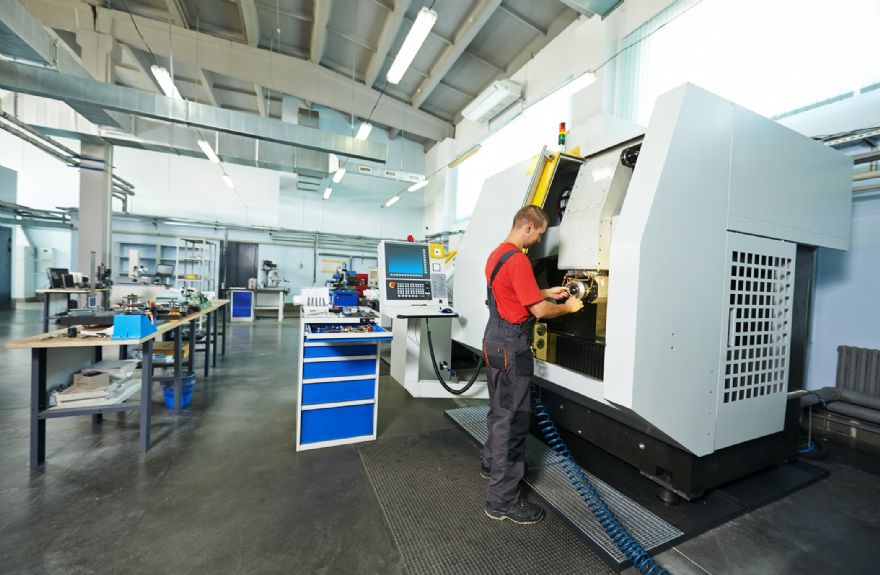
 Renting a workshop for metalworking or welding involves more specific requirements than a general commercial unit let. The building needs to cope with the electrical load, structural stress, fumes and noise that come with cutting, grinding and joining metal, and the tenant carries a number of legal duties once they move in. Working through these checks before signing anything reduces the chance of taking on a unit that needs expensive alterations, or that cannot legally be used for the work planned.1. Confirm the permitted use covers metalworking
An industrial unit is not automatically cleared for welding and fabrication. The
planning system separates lighter processes taking place in such units, which are expected to be carried out close to housing, from general industrial work that is more likely to disturb neighbours. Small-scale assembly or finishing may count as the lighter category, but sustained grinding, cutting and welding usually does not. A unit previously let for light engineering or assembly can therefore still need a change of use before heavier fabrication starts.
2. Check power supply and load capacityWelders, compressors, CNC machines and extraction fans place much heavier demand on a supply than the lighting, hand tools and small machinery found in a light assembly or packing unit. Ask what phase of electricity is available, what the distribution board is rated for, and when the system was last inspected.
Some workspace providers now market units with the supply already specified for this kind of work. Flexible operators such as BizSpace, with its
metalworking and welding workshops, sit alongside landlords like Basepoint, which also let smaller industrial units, while independent estates are often listed through local commercial agents. Whichever route is taken, the exact load should still be confirmed for the machinery planned.
3. Inspect floor load rating and surface conditionLathes, presses and stock racking put concentrated weight on a small footprint. Ask for the floor load rating in writing and check the surface for existing damage, uneven areas or previous repairs that might indicate a weaker slab underneath. A unit that looks adequate empty can behave differently once machinery is bolted down and running.
4. Assess ceiling height and internal dimensionsOverhead extraction ductwork, lifting equipment and taller machines all need clearance. Measure the space against the layout planned, including access routes around fixed equipment, before assuming the unit will fit. A workshop that suits light assembly work may not have the ceiling height needed for larger fabrication equipment.
5. Check vehicle access and delivery arrangementsSteel lengths, plate and finished parts are heavy and awkward to move. Check the width and height of roller shutters, whether there is a level loading bay, and whether delivery vehicles have room to turn and park without obstructing other units. This matters more for a workshop taking regular material deliveries than for a unit used mainly for warehousing finished goods.
6. Confirm security for tools, stock and materialsMetal stock and machinery carry resale value, which makes security a practical concern rather than a minor one. Ask about gated access, CCTV coverage, alarm response and who else has access to shared areas out of hours. A unit on a managed site will usually have clearer answers to these questions than an isolated standalone building.
7. Establish what ventilation and extraction is already in placeThe
HSE’s guidance is that natural ventilation through doors and windows is not sufficient for welding fume, and mechanical extraction is normally required. Check whether the unit has suitable local exhaust ventilation fitted, or whether the tenant is expected to install it. Ask who is responsible for the statutory testing this equipment needs at regular intervals, and whether the landlord permits new ductwork or openings in the building.
8. Review fire safety and hot-work arrangementsWelding and grinding produce sparks and heat, so fire precautions need closer attention than in a warehouse or distribution unit. Ask for the current fire risk assessment, which the responsible person must keep under review under the
Regulatory Reform (Fire Safety) Order, as set out on
GOV.UK. Check whether the site has a hot-work permit procedure, where fire alarms and extinguishers are positioned, and whether there is suitable space to store gas cylinders and flammable materials away from the working area.
9. Ask whether the building suits noisy workGrinding, hammering and cutting create sustained noise that travels through shared walls and roofs. Check how the unit is constructed, what the neighbouring units are used for, and whether previous occupiers carried out similar work. Ask whether the lease or site rules restrict working hours, since a unit where noisy work is confined to standard hours may not suit a business that needs early starts or evening shifts.
10. Clarify contract length, notice periods and room to growFitting out a metalworking unit with extraction, power distribution and fixed machinery takes time and money, so the contract terms need to match how long the business expects to stay. Check the minimum term, the notice period required to leave, and what condition the unit must be returned in, including whether fixed equipment has to be removed. Ask whether the landlord can offer a larger unit on the same site if the business grows, which avoids repeating the fit-out elsewhere.
Ready to plan a move into a metalworking workshop?A written list of the equipment, power supply and access the business needs gives a fixed standard to hold each unit against. Comparing specific units against that list at viewing stage, rather than relying on general listings, shows early on which ones can support the work.