 Snowbird Technologies
has reported successful results from trials of its deployable hybrid manufacturing platform during the RIMPAC 2026 multinational naval exercise, demonstrating the potential of additive manufacturing to produce critical replacement parts closer to the point of need while reducing costs and supply chain delays.
The Florida-based company took part in the Naval Postgraduate School's Consortium for Advanced Manufacturing Research & Education (CAMRE) Littoral and Expeditionary Advanced Manufacturing and Repair Experiment as part of the wider RIMPAC exercise in Hawaii.
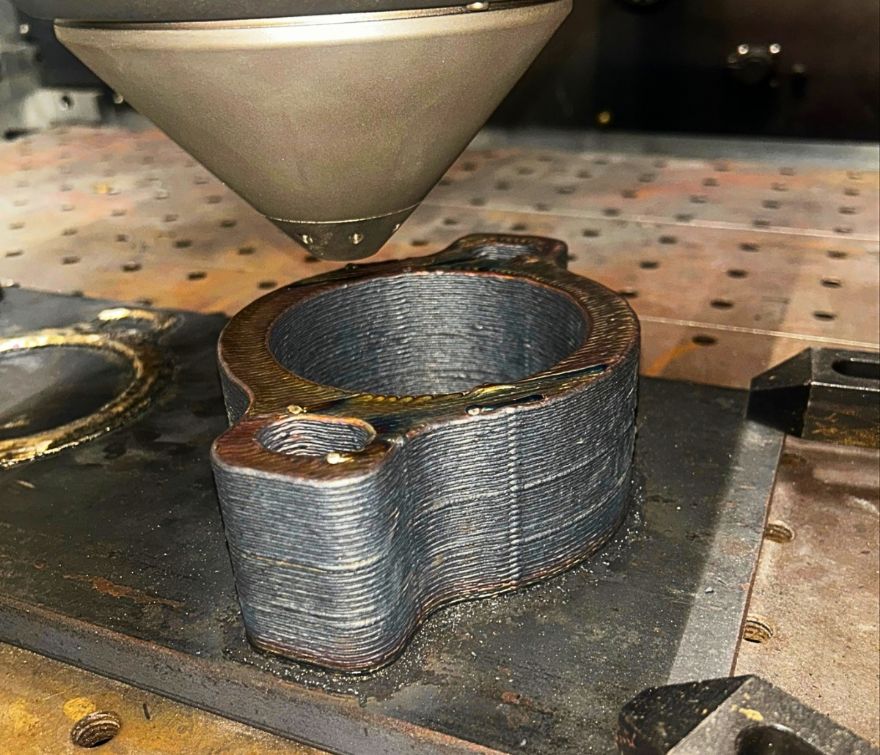
Its SAMM Tech deployable manufacturing system was used aboard the USS Essex and later at Schofield Barracks, where it produced a range of metal components using wire-laser additive manufacturing technology. The system incorporated Meltio's Engine Blue metal additive manufacturing platform and operated using nitrogen process gas sourced both aboard ship and from an on-site generator ashore.
The exercise was designed to assess the value of expeditionary manufacturing in operational environments where access to conventional supply chains and production facilities may be limited.
According to Snowbird Technologies, the deployment demonstrated the ability to manufacture replacement parts on demand, helping to reduce dependence on traditional procurement processes and lengthy logistics chains.
Karl Wojtkun of Snowbird Technologies said the exercise provided an important opportunity to validate the concept under realistic operating conditions.
"RIMPAC provided an important opportunity to demonstrate expeditionary manufacturing in an operational environment," he said. "The results validated not only the ability to print parts in austere environments, but also the potential to reduce procurement costs and supply delays when parts are needed immediately."
During the exercise, the system produced seven different components, including oxygen tank brackets, drain caps, turnbuckles, load test clamp components, a four-inch pipe flange and an air-pressure radio six-pack.
Snowbird's analysis suggested that four of the seven parts manufactured delivered cost advantages when compared with conventional procurement routes. Among the strongest results were load test clamp outer components, which were produced in around three hours at a manufacturing cost of approximately US$101, compared with procurement costs exceeding US$420. The company reported savings of up to 351% on selected parts.
Similarly, an air-pressure radio six-pack was produced in approximately five hours for around US$154, compared with procurement costs of more than US$620, equating to reported savings of 325%.
The production of oxygen tank brackets also highlighted the economic potential of localised manufacturing. A batch of 12 brackets was produced in an estimated 75 hours using around US$2,492 worth of wire and gas, compared with procurement costs that Snowbird estimated at more than US$9,600.
However, the company argues that the benefits extend beyond direct manufacturing costs. The availability of on-demand production can significantly reduce lead times and improve operational readiness when urgently needed parts are unavailable through conventional channels.
Snowbird said one component manufactured during the exercise avoided an estimated 692 hours of procurement time, underlining the potential value of deployable manufacturing systems for defence and other mission-critical applications.
Following shipboard operations aboard the USS Essex, the SAMM Tech platform was relocated to Schofield Barracks, where it continued manufacturing operations without reliance on fixed industrial infrastructure. The successful transition demonstrated the system's ability to operate across multiple environments while maintaining production capability.
Wojtkun said the longer-term opportunity lies in creating a complete digital manufacturing ecosystem capable of producing and sustaining critical parts wherever they are required.
"RIMPAC reinforced the concept that the value of expeditionary additive manufacturing isn't limited to whether a part can be printed," he said. "The larger opportunity is connecting digital part files, manufacturing, machining, inspection and sustainment capabilities so that the force can respond to parts requirements where and when they occur."
The company believes the results provide further evidence that deployable additive manufacturing could play an increasingly important role in supporting military operations by bringing production capability closer to the end user and reducing dependence on centralised manufacturing and global supply chains.