Autonomous vehicle specialist
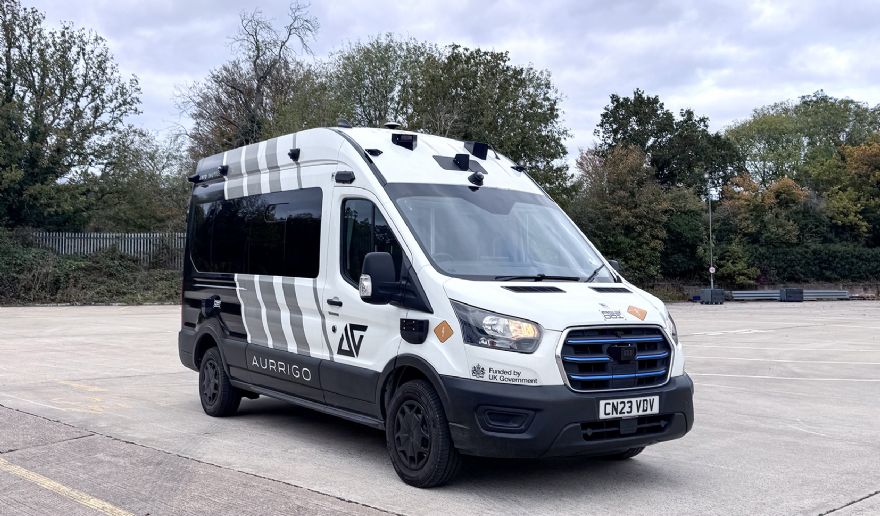
Aurrigo International is set to deploy its technology at a live UK port for the first time after securing up to £100,000 through the Freight Innovation Fund.
The Coventry-based company will trial its Auto-Shuttle electric autonomous vehicle at
Portsmouth International Port, testing how driverless technology can operate safely and reliably in a mixed-traffic port environment. Supported by the Connected Places Catapult, the project will involve transporting passengers, baggage and freight along a 1km route within the port.
The trial will generate data on reliability, journey times, energy consumption, operational interventions and systems integration, helping to assess the potential for wider deployment of autonomous technologies in freight and passenger operations.
Richard Fairchild, chief operations officer at Aurrigo, said the project represents an opportunity to transfer technology already proven in airports to a new sector.
"Our autonomous vehicles are transforming the way airports are operating in six different countries across the world. Now is the time to transfer this technology to the world of ports," he said.
Aurrigo initially received a £10,000 accelerator grant to complete a feasibility study with Portsmouth International Port, identifying operational challenges and assessing how autonomous vehicles could be integrated into day-to-day activities.
The programme will begin with unmanned test runs to map the site and validate safety systems before progressing to baggage transportation, passenger movements and freight operations.
Auto-Shuttle is equipped with more than 20 LiDAR sensors and cameras, enabling it to navigate complex environments and shared roadways. During later stages of the trial, the vehicle will transport passengers and baggage between the cruise terminal and ships, supporting port operations during busy periods.
Chris Hatter, head of compliance at Portsmouth International Port, said the facility has long embraced innovation and views the project as an opportunity to develop practical knowledge about autonomous operations.
"We have always positioned our port as an innovation lab, a place where we welcome new technologies that could improve the way we operate and enhance the passenger experience," he said.
Portsmouth International Port contributes around £400 million to the UK economy, supports more than 5,000 jobs and handles approximately 2.9 million tonnes of goods worth an estimated £7.5 billion annually.
Mr Fairchild believes the technology could have applications across ports worldwide.
"A live operational port is a very congested place with lots of additional complexities," he said.
"If we get it right, this could lead to deploying Auto-Shuttle for passenger transport at ports across the world, as well as potentially introducing our larger Auto-Cargo vehicle for freight-focused operations."
The Freight Innovation Fund is delivered by Connected Places Catapult on behalf of the Department for Transport, with selected projects receiving funding to trial innovative solutions at ports and logistics hubs.