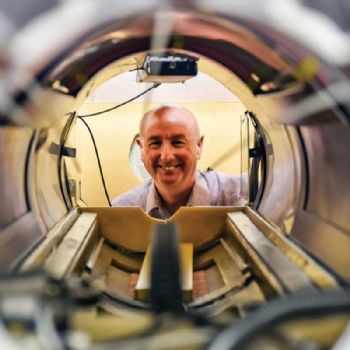
Patients in Scotland have become the first in the world to be scanned with a new MRI (magnetic resonance imaging) scanner that has been likened to “100 MRIs in one”.
It has taken a team of researchers at the University of Aberdeen 10 years to develop a prototype of the Fast Field Cycling MRI scanner, which uses strong magnetic fields and radio waves to produce detailed images of the inside of a patient’s body. It can extract more information than a traditional MRI machine by altering the strength of the magnetic field.
Research group leader David Lurie said: “This new scanner gives an extra dimension to the data collected from each patient, greatly expanding the diagnostic potential. It is incredibly exciting to have imaged our first patients; this is a major step towards our technology being adopted by hospitals.”
The University of Aberdeen (
www.abdn.ac.uk) has a proud history with MRI machines; a research team from the university built the first full-body MRI scanner in the 1970s and used it to obtain the first clinically useful image of a patient.
Senior lecturer Mary MacLeod said: “Treatments for stroke have to be given very early to be effective, but the CT scans that patients currently undergo on admission to hospital give us limited information to help plan that treatment.
“The Fast Field Cycling scanner has great potential, because it might give more accurate real-time information on what is happening in the brain tissue.”