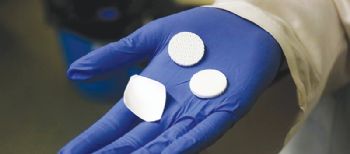
Scientists from the University of Girona (Spain) have successfully isolated breast cancer stem cells using additive manufacturing, in what is regarded as a very important milestone in the research of triple negative breast cancer — one of the most aggressive cancers, with a high relapse rate.
Using a Sigma 3-D printer from BCN3D (
www.bcn3dtechnologies.com), the research team has been able to manufacture three-dimensional scaffolds that recreate those structures found in the tissues and fibres of the body.
These 3-Dscaffolds can separate the stem cells responsible for causing relapses, in order to study them later for the purpose of devising pharmaceuticals capable of eliminating them without affecting other cells.
Teresa Puig, one of the researchers directing the project, said that to accommodate an optimal 3-D cell culture, the main aim was to develop a scaffold architecture that provides a high cell proliferation rate.
For this purpose, several values of the selected parameters (layer height, infill density, infill pattern, infill direction and flow) were tested on the slicing software BCN3D Cura to find the optimal ones and 3-D printed using the BCN3D Sigma.
Using the Taguchi experimental design method, some 10 copies of 27 scaffold configurations were made and then analysed to see which geometric form was most effective in separating the stem cells responsible for relapses.
Before this investigation, these cell cultures were produced two-dimensionally, which did not allow the cells to be effectively separated, so specific pharmaceuticals could not be produced to attack these cells.
The results of the study have been published in two scientific journals: International Journal of Molecular Sciences and Polymers.