 GKN Aerospace
 has successfully achieved a significant milestone by delivering a ground-based demonstrator of a liquid hydrogen aircraft fuel system. It was designed, built and tested in collaboration with
Filton Systems Engineering, under the
Innovate UK-funded
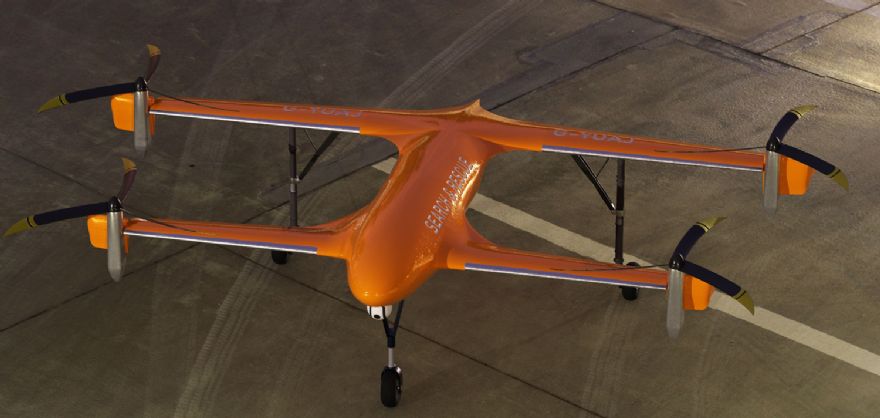
Safe Flight project. The goal of the project was to investigate the feasibility of using a liquid hydrogen fuel source to increase the endurance of a search and rescue uncrewed aerial system (UAS) concept.
The project enabled GKN to understand and address many of the safety concerns raised by the introduction of such a novel fuel. Integrated fuel tank design and distribution solutions were developed, including vaporisation and conditioning of the liquid hydrogen.
The performance of the fuel system was verified by coupling it with a proton-exchange membrane (PEM) fuel cell stack, representative of the type that could be installed on a future zero-emission aircraft. The project demonstrated successful storage and management of liquid hydrogen, supplying the fuel cell power system with hydrogen at the required temperature and pressure over a range of electrical loads typical of a UAS search and rescue mission.
Adaptable test rigKey outcomes of the project include development of safe system design, manufacturing knowledge, operational knowledge for liquid hydrogen fuel systems, hydrogen fuel system test data, and an adaptable test rig suited to the further study of hydrogen components and sub systems.
Max Brown, GKN Aerospace vice-president of technology , said: “We are delighted with the outcome of this project and believe we are very much at the forefront of exploring the challenges in this area. In a single end-to-end test environment the team have demonstrated fuelling and storage of liquid hydrogen, conditioning and distribution of cryogenic gas, and the use of PEM fuel cells to generate electrical power.”
Mr Brown continued: ”While the focus of this work was on a small-scale platform, the achievement is highly aligned with other work we are conducting in programmes such as H2GEAR, where we are delivering propulsion technologies focussed on enabling zero-emission flight.”
The
Safe Flight project has positioned GKN Aerospace for larger and more complex demonstrations of hydrogen-powered aircraft in the future, as the company continues to pursue its mission to become ‘the most trusted and sustainable partner in the sky’.