In an effort to democratise the manufacturing of complex devices, researchers from the
Massachusetts Institute of Technology (MIT) in the USA have developed a multi-material 3-D printing platform that could be used to fully print electric machines in a single step.
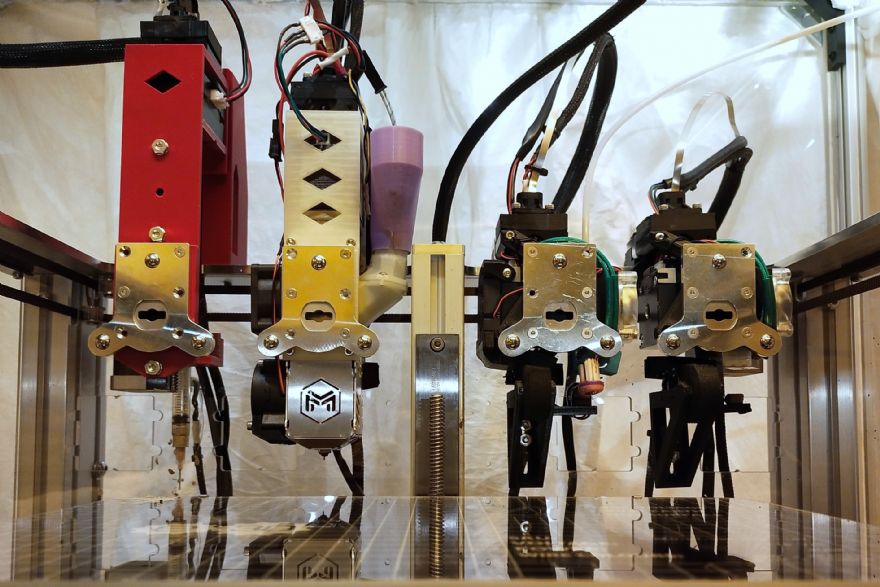
They designed their system to process multiple functional materials, including electrically conductive materials and magnetic materials, using four extrusion tools that can handle varied forms of printable material. The printer switches between extruders, which deposit material by squeezing it through a nozzle as it fabricates a device one layer at a time.
The researchers used this system to produce a fully 3-D printed electric linear motor in a matter of hours using five materials — and they only needed to perform one post-processing step for the motor to be fully functional. Furthermore, the assembled device performed as well or better than similar motors that require more complex fabrication methods or additional post-processing steps; and in the long run, this 3-D printing platform could be used to rapidly fabricate customisable electronic components for robots, vehicles, or medical equipment with much less waste.
Luis Fernando Velásquez-García, a principal research scientist in MIT’s Microsystems Technology Laboratories (MTL) and senior author of a paper describing the 3-D printing platform, said: “This is a great feat, but it is just the beginning. We have an opportunity to fundamentally change the way things are made by making hardware onsite in one step, rather than relying on a global supply chain. With this demonstration, we’ve shown that this is feasible.”
He is joined on the paper by electrical engineering and computer science graduate students Jorge Cañada, who is the lead author, and Zoey Bigelow. This research is funded, in part, by
Empiriko Corp and the
La Caixa Foundation.