 Alexander Dennis
, a subsidiary of
NFI Group Inc, a leading manufacturer of buses and coaches, has announced it is consulting on a new approach aimed at securing Scottish manufacturing operations and safeguarding jobs.
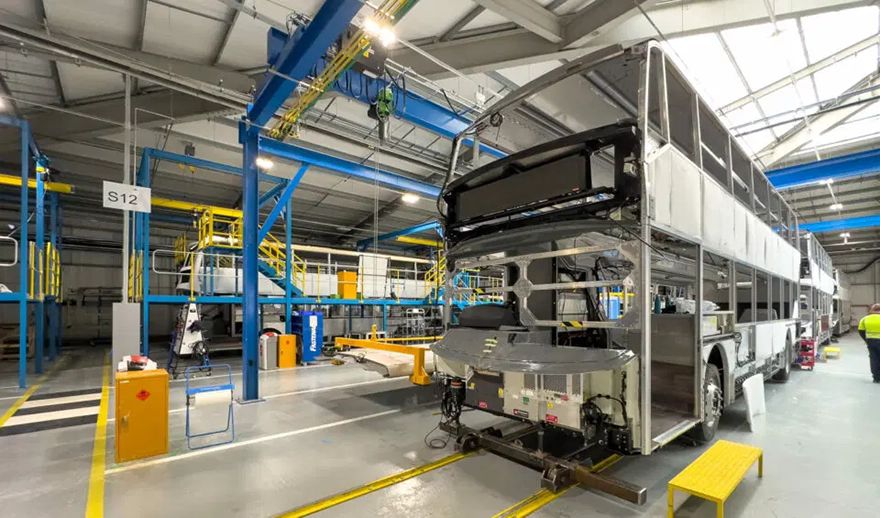
Under the consultation, Alexander Dennis would convert its Larbert manufacturing facility to a chassis manufacturing site, supporting all of its low-emission and zero-emission bus products. The company would also close its legacy Falkirk facility, aligning with its long-standing plans to exit that site.
The proposal would safeguard approximately 200 skilled manufacturing and support jobs previously at risk of redundancy and would retain approximately 350 roles within Scotland. In total, up to 115 roles would be placed at risk of potential redundancy. However, Alexander Dennis would retain the flexibility to reintroduce bus body manufacturing to its Larbert facility at a later date enabling the company to respond positively to future needs.
The company previously proposed closing both of its Scottish manufacturing sites in Falkirk and Larbert with up to 400 jobs at risk of redundancy. In September 2025 Alexander Dennis and the Scottish Government agreed a first-of-its-kind furlough scheme aimed at protecting jobs and long-term manufacturing capacity in Scotland which has enabled the company to propose a different outcome for its Scottish manufacturing colleagues.
Paul Davies, Alexander Dennis president and managing director, said: “We are proposing to retain jobs and restart manufacturing at Larbert with a focus on chassis manufacturing. This represents the best possible outcome for our business, employees, customers and supply chain partners in the current climate. This new approach would enable us to better align with the current market while improving our efficiency. It also allows us to continue to adapt to rapidly changing and challenging market dynamics.”
Consultation periodHe continued: “We remain grateful to the Scottish government for the furlough scheme support to secure these jobs, maintaining skills and manufacturing capability in central Scotland. We will continue to work with the Scottish government, its agencies and the trade unions to support staff during the consultation period. We are absolutely committed to doing the right thing by our team members and our stakeholders to protect jobs, invest in our business and maintain strategically important manufacturing capability in Scotland.”
The UK domestic bus manufacturing sector has lost significant market share in 2025, with 51% of all zero-emission buses purchased in the UK sourced from overseas manufacturers — an increase of 25% compared to 2024. These increased purchases from non-UK bus manufacturers have occurred even as UK taxpayer-funded contributions in the industry increased. Recent government interventions have also fallen far short of the bold and decisive action the industry needs and risk domestic manufacturers losing even more market share to overseas competitors.
Mr Davies added: “The output of the UK Bus Manufacturing Expert Panel does not place enough focus on the significant jobs and economic contribution the domestic bus manufacturers make to the UK. In addition, the results of the ScotZEB3 scheme are incredibly disappointing, with the majority of the funding going overseas to support bus and coach manufacturing in China.
“We continue to repeat the same calls to both the Scottish and UK governments to level the playing field, recognise the cost of manufacturing in the UK and the fact that these higher costs flow through the supply chain. Manufacturing in this country needs to be better supported if we are to generate the economic benefit that the country so badly needs.”