UK Government funding has been awarded to eight new feasibility studies examining how autonomous vehicle technologies could be deployed in near‑commercial settings across the UK, as part of efforts to accelerate the country’s readiness for connected and automated mobility (CAM).
Announced on 9 April, the latest awards come through the Feasibility Studies 2 competition, a strand of the £150 million CAM Pathfinder programme. The competition supports projects that aim to demonstrate credible business cases for deploying self‑driving vehicle systems in operational environments, helping to move autonomous technologies closer to large‑scale commercial use.
The funded studies span freight, public transport, private‑hire services and specialist site operations, reflecting the government’s focus on practical applications where automation could address labour shortages, cost pressures and decarbonisation goals. Several projects are concentrated on strategic industrial corridors, logistics hubs and critical infrastructure, with a strong emphasis on productivity gains and operational efficiency.
Among the successful projects is ASPIRE, a study led by
Bamford Bus Company with academic partners that will examine how automated mobility could help tackle structural driver shortages while maintaining transport connectivity and complying with zero‑emission mandates.
In the aviation sector,
Fusion Processing is investigating how autonomous vehicle systems could reduce operating costs at UK airports by quantifying the staffing, processes and investment required to deliver efficiencies on airside operations.
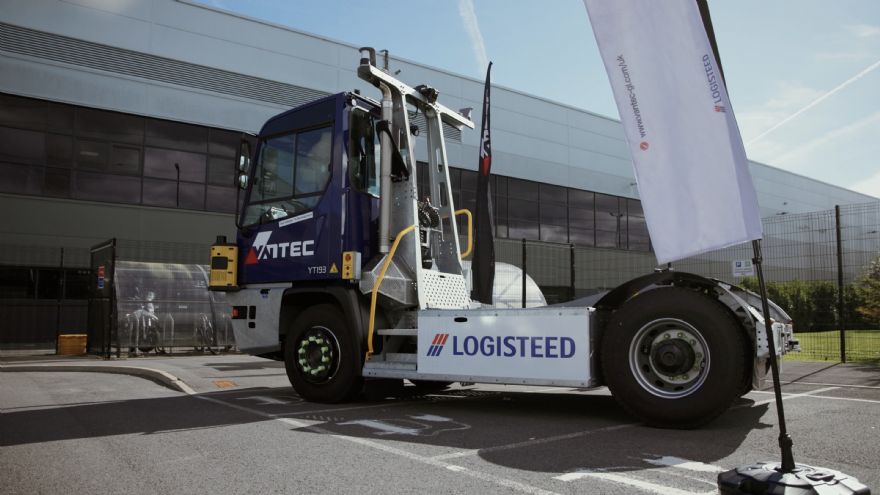
Heavy freight and logistics feature prominently in the programme. A consortium led by BCA Automotive is assessing the viability of autonomous electric HGVs operating along the strategic route between Nissan’s Sunderland manufacturing plant and the Port of Tyne, while a separate study will evaluate the commercial case for deploying autonomous yard tractors on the
Vantec-Nissan route. That project builds on earlier technical trials and aims to move decisively toward full‑scale deployment without safety drivers.
A further study will investigate the delivery of one of the UK’s first dedicated connected and autonomous vehicle corridors, linking the Wellcome Genome Campus in Cambridgeshire with Whittlesford Parkway railway station. The project is intended to demonstrate how purpose‑designed infrastructure could support routine autonomous operations while improving public transport connectivity.
The CAM Pathfinder programme was first announced in the government’s Advanced Manufacturing Sector Plan and is being delivered by the Department for Business and Trade in partnership with Innovate UK and Zenzic. Its overarching ambition is to grow the UK’s connected and automated mobility sector, currently valued at £3.7 billion, while strengthening domestic capability in advanced vehicle technologies, software and systems integration.
Mark Cracknell, programme director at
Zenzic, said: “CAM solutions have the potential to unlock new business opportunities and economic growth in all corners of the country. These feasibility studies will help to articulate the impact that market ready CAM technologies can have on both business productivity and economic growth.”
Claire Spooner, director of innovation service at
Innovate UK said: “This latest tranche of funding from the CAM Pathfinder programme will enable the UK to unlock the huge future benefits of these new CAM technologies. These projects, around the UK, will develop new solutions for a range of CAM applications and scenarios and they will enable the companies behind these innovations to scale and grow.”