Artificial intelligence (AI), automation and digitalisation dominated this year’s
Hannover Messe 2026, held last week (20-24 April), underlining how industry is responding to economic pressure with practical, deployable solutions rather than promises.
Held in Hannover, the world’s leading industrial trade fair attracted around 110,000 visitors, fewer than in 2025 but with undiminished international reach and relevance. Around 40% of visitors travelled from outside Germany, with strong representation from China, Brazil, the USA, Japan and South Korea. Travel disruption caused by airline and public‑transport strikes affected attendance, but exhibitors reported high‑quality discussions and concrete project activity.
Jochen Köckler, CEO of Deutsche Messe AG, said: “This year’s
Hannover Messe was both a technology show and a source of inspiration. The companies showed that Germany and Europe possess the necessary tools to remain competitive, but what is crucial now is to decisively take advantage of this potential and put the pedal to the metal.”
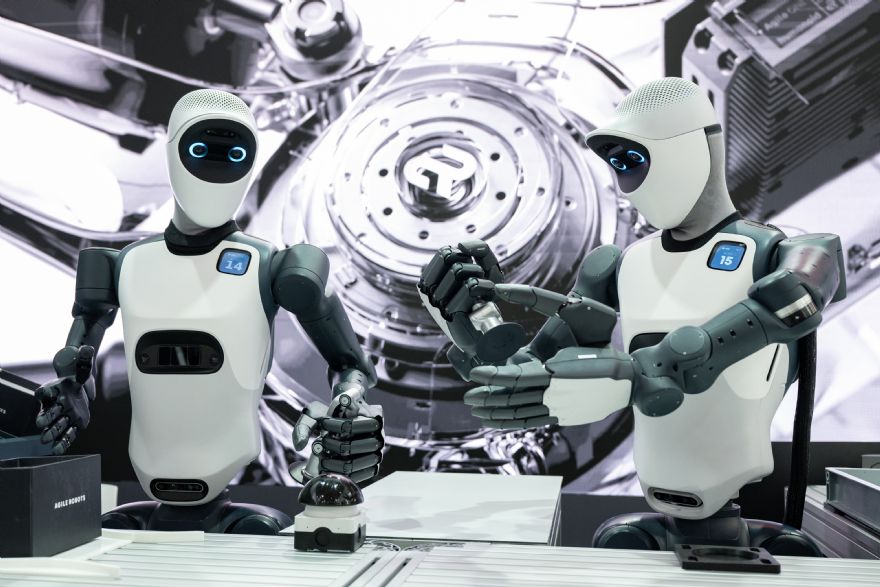
Across the show, industrial AI, robotics, automation and energy infrastructure emerged as the defining technologies shaping the future of manufacturing. Exhibitors demonstrated AI‑assisted production systems capable of automating processes and predicting faults, alongside increasingly capable humanoid robots designed for future factory and service applications.
Energy efficiency and grid infrastructure were also prominent, with new solutions aimed at supporting carbon‑neutral industrial production and improving energy resilience. The emphasis was on technologies that have moved beyond pilot projects and are ready for industrial deployment. Reflecting this shift from experimentation to application, the exhibition attracted an unusually high number of senior business and political leaders. Among those attending were German Chancellor Friedrich Merz, Brazilian President Luiz Inácio Lula da Silva, Roland Busch (Siemens), Christian Klein (SAP), and German Federal Ministers Katherina Reiche (Economic Affairs) and Boris Pistorius (Defence).
Rapid deregulation requiredWhile the technology message was largely optimistic, industry leaders were clear that Europe’s competitiveness remains under pressure from high costs, regulation and geopolitical uncertainty.
Dr Gunther Kegel, president of ZVEI and chairman of the exhibitor advisory board, said: “The new
Hannover Messe concept is a success. But the message is unmistakable — we urgently need rapid deregulation if we want to remain competitive, especially in industrial AI. Companies have demonstrated the potential — now Berlin and Brussels must remove the barriers.”
A similar view was expressed by Thilo Brodtmann, managing director of the VDMA. “Digitalisation is progressing at pace, while AI and humanoid robotics stood out as the defining themes of the show. Industrial SMEs want to deliver the technologies that will keep Europe competitive, and they can do it. What is needed now are the reforms that have been promised.”
Brazil, the official ‘Partner Country’ for 2026, added a strong international dimension. With a broad focus on industrial production, energy and digitalisation, Brazil positioned itself as a high‑growth market and strategic partner for Europe. Mr Köckler said: “Especially in times of global upheaval, this partnership sends an important signal.” He added that the approaching Mercosur trade agreement had given additional momentum to Brazilian participation and opened new prospects for transatlantic cooperation.
The event also showcased an updated trade fair format. A clearer hall layout improved navigation, while new networking formats (particularly masterclasses) allowed exhibitors to engage more directly with decision‑makers. The Centre Stage emerged as a focal point, attracting around 30,000 visitors with a programme addressing industrial transformation, policy and technology. Its popularity underlined the strong demand for orientation and dialogue during a period of rapid industrial change.
From 2027,
Hannover Messe will run for four days (5–8 April 2027) instead of five, concentrating activity on peak visitor days. A new
Europe Energy Week, organised in cooperation with
dmg events, will run in parallel, bringing together industry, infrastructure providers and policymakers around Europe’s energy future.
Mr Köckler concluded: “
Hannover Messe is becoming more focused and closer to industry. The combination of AI with real machines and production systems will shape the show in the years ahead.”