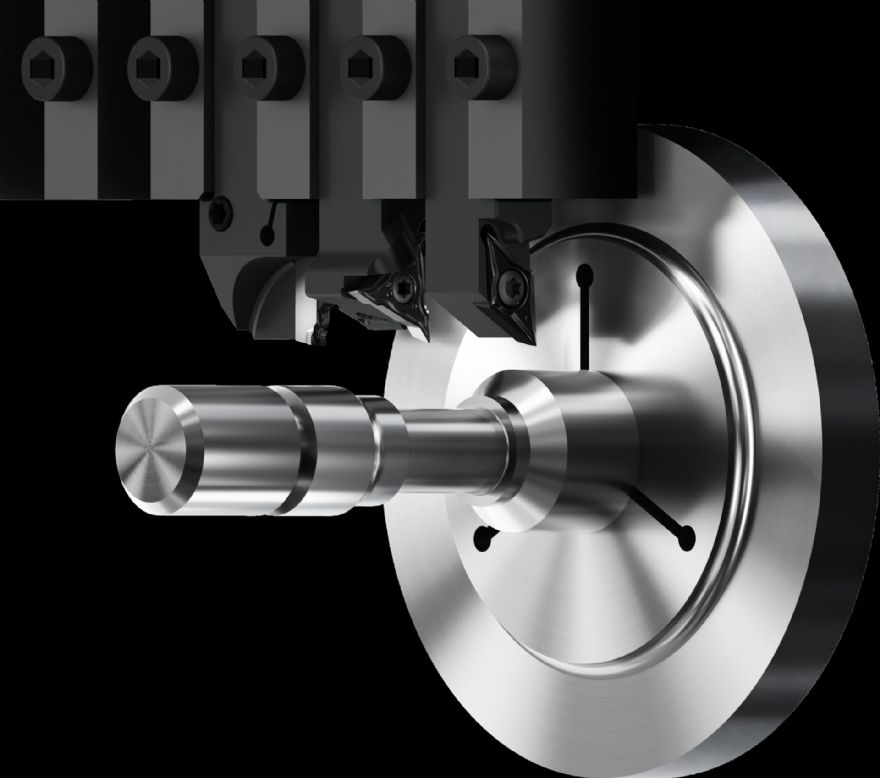
A single cardiac pacemaker contains up to 40 miniature components. A modern passenger aircraft uses an estimated three million fastening elements. One wind turbine requires up to 15,000 screws. These statistics demonstrate the universal importance of small parts. Small-part machining is growing at pace, driven by relentless miniaturisation across industries where failure is simply not an option. The companies best positioned to serve this market are those that have invested deeply in precision tool technology.
Walter, the Tübingen-based cutting tool specialist, is one such company, and its portfolio of solutions for small-part machining represents some of the most technically refined tooling available today.
The production of small parts with a diameter below 40mm has become one of the fastest-growing segments in turning and milling technology. Demand is structural rather than cyclical, driven by the ongoing miniaturisation of products across aerospace, medical technology, automotive, electronics, defence and watchmaking. In each of these sectors, small components must simultaneously achieve tight dimensional tolerances, high surface quality and, in many cases, comply with demanding material specifications for biocompatibility, corrosion resistance or thermal performance.
In medical technology alone, small-part production is a matter of life and death. Dental implants, orthopaedic joints, surgical instruments and catheter components must be manufactured to exacting standards, often from titanium alloys or specialist stainless grades that are inherently difficult to machine. In aerospace, fuel-system connectors and fasteners must withstand extreme temperatures and pressures over tens of thousands of flight hours without degrading. For automotive manufacturers operating in high-volume production environments, the economics of machining small components are equally pressing.
The Swiss-type sliding-headstock turning centres, central to this sector, are among the most technically sophisticated in the workshop. They can operate at spindle speeds of 10,000 to 15,000rev/min and combine turning, milling, hole-making, thread cutting and grooving in a single clamping operation across up to ten axes. The tools loaded into these machines must be equally capable. That is where the choice of cutting tool partner becomes critical.
One factor reshaping the economics of small-part machining is the sustained rise in carbide raw-material prices. Tungsten, cobalt and the rare-earth elements used in high-performance cutting-tool grades have all faced significant price pressure in recent years, driven by supply-chain volatility, geopolitical factors and increased global demand from both the tooling and battery sectors. For manufacturers purchasing standard or large-diameter carbide tools, these increases translate directly into higher consumable costs per component.
Small tools offer a compelling counterweight to this trend. The material volume in a micro drill, a miniature end mill or a small-diameter thread milling cutter is a fraction of that in a larger equivalent. This means that when carbide prices climb, the cost impact on small tooling is proportionally smaller. Manufacturers who migrate away from oversized tooling setups towards optimised, application-specific small tools may find that the per-tool cost of their consumables spend actually falls, even as raw material prices rise. This is not a minor consideration for companies running Swiss-type turning centres around the clock. Intelligent tool selection can have a meaningful effect on the cost per part.
Small-part machining is not simply standard machining at a reduced scale. The technical challenges are qualitatively different. Tolerances are routinely specified in the micron range, with ±0.01mm a common requirement and ±0.001mm achievable with the right machine-tool combination. Component geometries that would be straightforward at 100mm diameter become exercises in technical ingenuity when the workpiece diameter is below 5mm.
Thermal management is particularly critical. At spindle speeds common in Swiss-type machining — and exceeding 60,000rev/min in micro-milling applications — heat generation is intense, and its impact on dimensional accuracy is disproportionate when tolerances are measured in microns. Chip formation and evacuation must be precisely controlled to avoid re-cutting and surface damage. Vibration, which might be negligible when machining a large component, can render a miniature part entirely out of specification. Every element of the process chain must be precisely engineered.
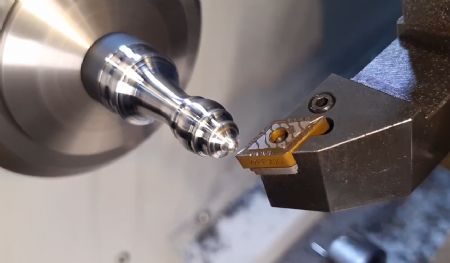
The tools must be specified with corresponding care. Cutting edge geometry, coating selection, substrate grade and corner radius all interact with workpiece material in ways that become more pronounced as dimensions shrink. A geometry that performs acceptably on a 20mm component may cause deflection, chatter or premature wear on the same material at 3mm.
Walter’s investment in small part machining solutions reflects both the technical complexity of the sector and the scale of the opportunity it represents. The company’s range spans turning, grooving, milling, holemaking and threading — covering the full spectrum of operations a sliding head lathe or micro machining centre is likely to perform.
In turning, Walter’s Tiger‑tec Gold WPP20G grade has been developed specifically for Swiss-type lathes. The grade is engineered to deliver the combination of wear resistance and edge stability that precision small-part turning demands, particularly when machining steel components at high spindle speeds. Positive rake angles, sharp cutting edges with fully ground circumferences, and small corner radii are the geometric prerequisites for turning at this scale, reducing cutting forces on thin-walled or delicate workpieces whilst facilitating the short chip formation that is essential for uninterrupted automated production.
For milling applications, the Walter Xill‑tec range provides the precision geometry required to machine the finest component features, whilst the MD266 Supreme exemplifies Walter’s commitment to the miniature milling segment. Complex workpiece contours, pockets, grooves and non-linear geometries that might require multiple tool changes on less capable platforms can be addressed efficiently with the right cutter selection, reducing cycle times and maintaining the dimensional consistency that automated production demands.
Holemaking at small diameters is all about concentricity, drilling strategy, cooling and swarf removal. Walter’s DB133 Supreme micro drill is designed precisely for these applications, with tool geometry and a substrate combination that maintain precision and process reliability. Where spindle speeds exceed 40,000rev/min, coolant filtration of 3 to 5µm becomes essential to protect internal coolant channels and maintain tool life — a consideration that Walter’s application engineering teams are well placed to support.
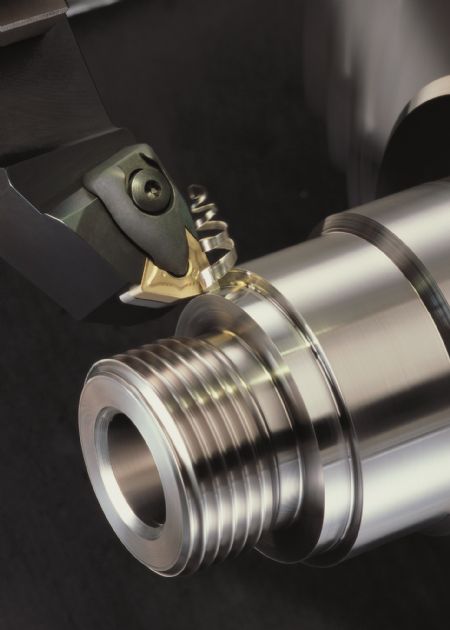
In threading, process reliability is paramount. A tap failure in a miniature bore can destroy a component that has already accumulated significant machining value. Walter’s TC620 Supreme thread milling cutter is designed for applications where time savings and process security are the overriding priorities. It combines operations and reduces the risk of catastrophic tool breakage, a perennial concern when threading small components.
The material landscape in small part machining is diverse and, in many sectors, demanding. Titanium alloy Ti6Al4V remains the material of choice for medical implants and aerospace structural components, combining high strength with biocompatibility and corrosion resistance. However, it is notoriously difficult to machine, generates high cutting temperatures and places severe demands on tool coatings and geometries. Stainless steels such as 1.4301 and 1.4401 dominate food processing and medical device applications. Aluminium alloys are gaining ground in automotive and aerospace small components as lightweight design imperatives intensify.
Looking ahead, AI is beginning to transform process monitoring and quality assurance in small part production, while digital twins create virtual models of physical components and manufacturing processes to identify and eliminate errors. Sustainability is also reshaping material choices. For manufacturers navigating this complexity, the value of a cutting tool partner with genuine expertise in small part machining cannot be overstated.
Walter’s combination of application-specific grades, precision geometries, modular tooling systems and engineering support positions the company as a first-choice partner for companies committed to precision at the smallest scale. In a sector where a micron of dimensional error can render a component unusable and where the cost of failure is measured not just in scrap but in the safety of the patients, passengers and operators who depend on these components, getting the tooling right is no longer a secondary consideration. It is the foundation on which everything else is built.