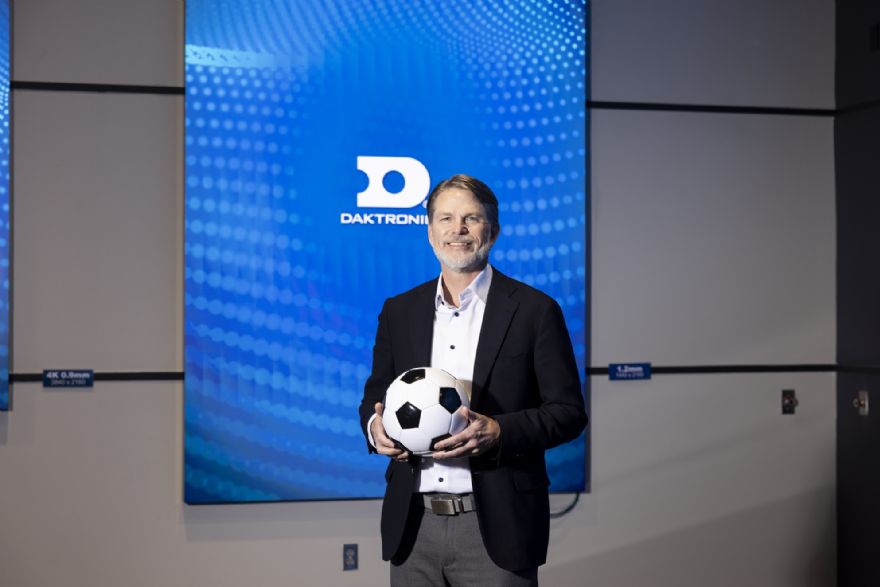
 Pic: Matt Kurtenbach, vice president of manufacturing at Daktronicswww.daktronics.com/en-gb
 Daktronics is playing a prominent role in bringing the 2026 FIFA World Cup to life, supplying large-scale LED display systems for a number of host venues as the tournament heads towards a record-breaking edition across the United States, Mexico and Canada.
With 48 teams, 104 matches and more than three million spectators expected in stadiums, the event will demand cutting-edge technology to deliver a fully immersive fan experience.
The South Dakota-based electronics manufacturer, known for its LED displays and integrated audio-visual systems, is equipping six stadiums hosting World Cup matches with a range of digital solutions. These include main video boards, perimeter displays and scoring systems, all designed to enhance both live viewing and in-stadium engagement.
“Our display systems are installed in six stadiums – in the U.S. and one in Mexico – that are hosting World Cup events,” said Matt Kurtenbach, Daktronics’ vice president of manufacturing. “This includes large video screens as well as main and perimeter display systems.”
Beyond showing scores, the displays will be integral to the matchday atmosphere, broadcasting live footage, replays and commercial content to audiences across vast arenas.
“Some of the screens consist of millions of tiny LEDs. Of course, we ensure that they function optimally on this grand stage and are ready for the World Cup,” Mr Kurtenbach added.
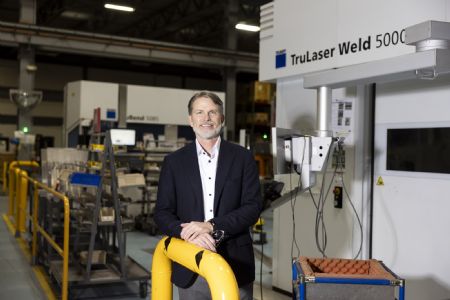
For Kurtenbach, who has spent 35 years with the company, the impact of Daktronics’ technology extends far beyond the stadium walls. “What makes me happiest is that we accompany people throughout their entire journey,” he explained. “When they’re driving, they see displays that help manage traffic. At petrol stations, our screens show fuel prices or promote in-store offers. At the subway station or in the stadium, they help visitors find their way. So our products are everywhere, in all sorts of different forms.”
This breadth of application is underpinned by a manufacturing model built on high levels of vertical integration. Around 2,500 employees worldwide produce everything from metal housings and LED modules to the electronics and control systems that power the displays.
Aluminium forms the bulk of the enclosures, with steel used where required, while the LED modules are installed and connected within each assembly.
To support this production, Daktronics has relied on Trumpf machine tools for roughly a quarter of a century. Mr Kurtenbach himself oversaw the transition from older turret punch presses, which were hampered by rapid tool wear and frequent downtime.
“Trumpf promised us significantly longer tool life,” he recalls. “We decided to try out a punching machine and see if it lived up to those promises. And it did. Incidentally, that first machine is still in use today.”
The Brookings facility now includes a range of Trumpf technologies, including punching and bending machines, a TruMatic 6000 fibre punch laser system and a TruLaser Weld 5000. Automation also plays a central role, with systems such as SheetMaster handling, STOPA storage and ToolMaster tool-changing solutions helping to improve efficiency and safety.
“Trumpf doesn’t build cheap machines, but extremely reliable ones,” Kurtenbach says. “Over the entire service life of the systems, that pays off.”
Manufacturing at Daktronics is characterised by relatively low volumes and a high degree of customisation, with most products made to order. This flexibility has driven the company to adopt more streamlined and connected production methods. “When I saw how Trumpf used it in their production, I said: I think we can do that here at Daktronics, too,” Mr Kurtenbach notes.
Further automation remains a key ambition, particularly in material handling and assembly processes. At the same time, rising demand for high-resolution indoor displays is placing increasing emphasis on precision.
“The closer the pixels are together, the higher the precision required,” Kurtenbach says. “That’s why we’ll be working toward tighter tolerances in the future.”
As the World Cup approaches, Daktronics aims to ensure its displays perform flawlessly on one of sport’s biggest stages. “Customers don’t just buy a display from Daktronics; above all, they buy confidence in a reliable product,” Kurtenbach said. And when the tournament begins, he will be watching closely. “I’ll definitely be watching those games.”