A major expansion of offshore wind energy risks repeating the mistakes of previous industrial developments unless coastal communities and marine ecosystems are placed at the centre of planning, according to a new report from
Rewilding Britain.
The report,
Rewilding our Waters in an Era of Offshore Wind, argues that the rapid growth of offshore wind should deliver benefits not only for climate goals, but also for local economies, fisheries and marine biodiversity.
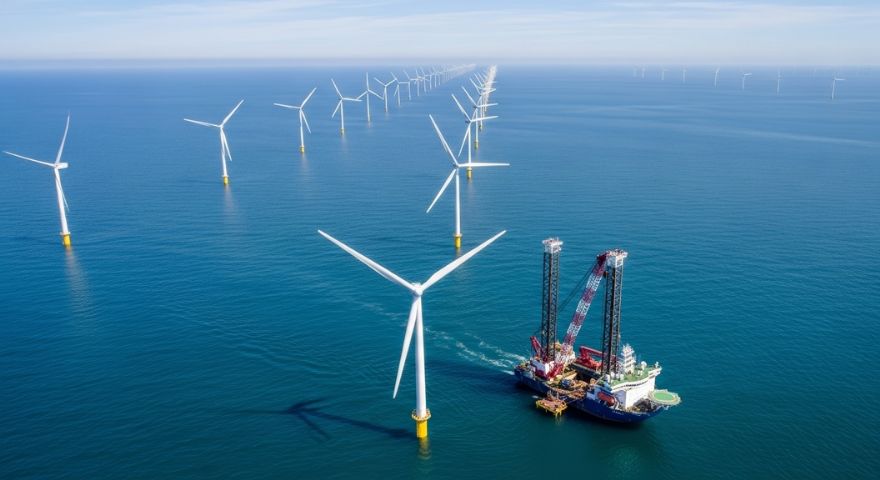
With global climate targets expected to require around 2,000GW of offshore wind capacity by 2050, the sector is facing an unprecedented period of growth. This would involve the installation of an estimated 5,000 new turbines each year and the use of more than 500,000km² of ocean space worldwide.
Rewilding Britain warns that decisions made over the coming years will have long-term consequences for the UK's marine environment and coastal communities.
Kevin Cumming, rewilding director at Rewilding Britain, said: “Government, industry, fisheries, coastal communities and marine restoration practitioners must work together to co-design a new approach to offshore wind development – one that delivers tangible benefits for people and nature alike.”
He added: “It’s vital that clean energy projects support nature recovery, with marine restoration creating new jobs, boosting biodiversity, and ensuring coastal communities have a genuine stake in the future of their seas.”
The report proposes three key measures to improve outcomes from offshore wind developments. These include integrating marine rewilding into project planning, retaining more economic value within coastal communities through stronger local ownership and investment, and adopting a collaborative design process involving industry, government, fishers, conservation groups and residents.
According to the report, Britain’s marine ecosystems are already under significant pressure. The UK has lost up to 92% of its seagrass meadows and 95% of its native oyster reefs, while marine vertebrate populations have declined by more than half during the past 50 years.
Rewilding Britain argues that offshore wind projects could play a positive role in reversing these trends if habitat restoration and nature recovery measures are incorporated from the outset.
“Britain is set to reshape vast areas of our seas,” said Mr Cumming. “The question is whether offshore wind becomes another industrial revolution that extracts wealth from communities and nature, or instead actively supports and restores both.”
The organisation points to lessons learned from decades of onshore renewable energy development, where poorly planned projects and limited local benefits have sometimes damaged public confidence and reduced support for new schemes.
The recently approved Berwick Bank offshore wind project is cited as an example of the challenges facing the industry. The development has attracted opposition over predicted impacts on seabird populations, with estimates suggesting more than 4,000 birds, including guillemots, gannets and kittiwakes, could be lost during its first year of operation.
Concerns have also been raised by fishing interests and local communities about potential effects on tourism and regional economies.
The report further highlights economic challenges associated with offshore wind deployment. It states that only around 30% of expenditure linked to turbine construction currently remains within the UK, meaning a significant proportion of supply chain value is captured overseas rather than benefiting domestic industries and coastal regions.
Despite these concerns, Rewilding Britain stresses that offshore wind and marine restoration do not need to be competing priorities. Instead, it argues that combining renewable energy development with large-scale habitat recovery could create new opportunities for economic regeneration, biodiversity enhancement and more resilient coastal communities.
“We have a once-in-a-generation opportunity to show that clean energy, thriving coastal communities and healthy seas can go hand-in-hand,” said Mr Cumming. “If we get this wrong, we risk industrialising our seas in ways that aggravate the problems that have already pushed marine wildlife and many coastal communities into serious decline.”
The report concludes that offshore wind development should be viewed not only as an energy transition challenge, but also as an opportunity to reshape the relationship between industry, communities and the marine environment for decades to come.