The manufacturers that embrace integrated automation over the next five years are set to pull decisively ahead of competitors still relying on disconnected production systems, according to new global research highlighting one of the biggest shifts in industrial manufacturing for decades.
PwC's Global Industrial Manufacturing Sector Outlook 2026 predicts that the proportion of manufacturers with highly automated core processes will more than double by 2030, rising from 18% today to 50%. Among the industry’s most advanced businesses, automation levels are expected to reach 65%, creating an increasingly significant competitive advantage through higher productivity, greater agility and faster decision-making.
For Black Country based electrical control systems manufacturer and automation integrator
Banelec, the findings reflect a trend that has been steadily gathering pace across UK manufacturing. Rather than viewing automation as a series of individual projects designed to improve a single production line, more manufacturers are looking at how electrical controls, machinery, robotics, energy systems and production data can work together as part of a wider operating environment.
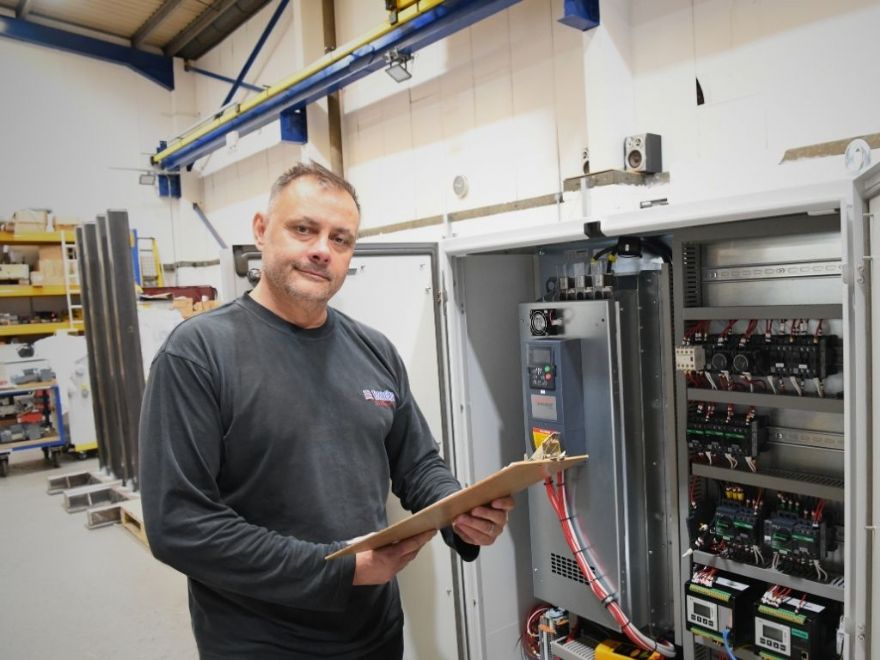
Dean Banner, managing director of Banelec (pictured top), believes the conversation around automation has fundamentally changed. He said: “Five or ten years ago, many automation projects focused on replacing a manual process or making one machine work more efficiently. Today our customers are looking at their entire operation. They want production equipment, electrical controls, robotics, energy systems and factory data to communicate with one another so the whole business becomes more responsive.”
That shift places greater emphasis on the engineering infrastructure underneath digital manufacturing. A modern automated production environment may bring together PLC and HMI systems, SCADA, variable speed drives, robotics, safety systems and industrial networks, with the control architecture providing the link between individual pieces of equipment.
It is an area in which Banelec works across the full project lifecycle, from control-system design and panel manufacture through to programming, integration, installation and commissioning. Its engineers work with a range of PLC, HMI and SCADA platforms, including Siemens, Allen-Bradley, Mitsubishi and Schneider, allowing systems to be integrated around the requirements of individual production environments rather than forcing manufacturers into a single technology stack.
The PwC research, based on interviews with 443 senior manufacturing executives across 24 territories, concludes that future performance will depend less on simply acquiring new technologies and more on integrating them effectively. Production and operations are expected to become the largest users of advanced technologies by 2030, while the research also identifies a widening gap between future-fit manufacturers and their peers. That distinction is particularly relevant as factories become more interconnected. Adding a robot, upgrading a PLC or introducing a monitoring system can deliver a local improvement, but the wider gains come when those technologies can exchange information and contribute to a coherent production strategy.
According to Mr Banner, this systems-level thinking is where many manufacturers now gain their competitive advantage. He said: “The real value isn’t simply adding more automation. It’s making every part of the factory work together. If machines operate in isolation, you only improve individual processes. When electrical control systems integrate production equipment, energy management, quality monitoring and operational data, manufacturers gain visibility they simply didn’t have before. That allows faster decisions, better productivity and much greater resilience.”
The same principle is increasingly being applied to maintenance. Industry 4.0 technologies can allow manufacturers to move from reactive “fail and fix” maintenance towards more predictive approaches, using equipment data to identify potential problems before they result in unplanned downtime.
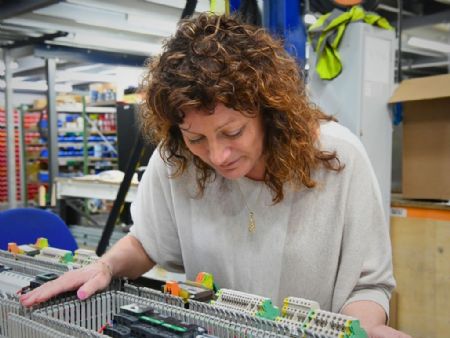
Banelec’s Industry 4.0 work includes remote monitoring, live data streaming and predictive maintenance applications, reflecting the broader move towards using production data not simply to observe what has happened, but to inform what should happen next. PwC also expects manufacturers to generate an increasing proportion of revenue from activities beyond traditional product manufacturing. Its research projects that 44% of total revenue could come from outside the manufacturing of industrial and consumer products by 2030, as businesses expand into connected solutions, services and intelligent technologies.
For engineering companies, that evolution is creating demand for automation infrastructure capable of supporting more flexible production, digital manufacturing, predictive maintenance and remote monitoring. It also means that integration needs to be considered from the outset. Retrofitting new technologies into an existing production environment can involve legacy equipment, different control platforms, safety requirements and the practical constraints of keeping a working factory operational.
Banelec’s integration engineers work on both new systems and existing production equipment, including projects involving PLCs, robotics and HMI systems. The company also provides relocation and integration services where existing equipment needs to be incorporated into a new or modified production environment. Mr Banner commented: “Automation cannot purely be viewed as a capital investment to reduce labour. It’s becoming part of wider business strategy. Customers want systems that can adapt as production changes, accommodate new equipment, provide better operational information and support future expansion without rebuilding everything from scratch.”
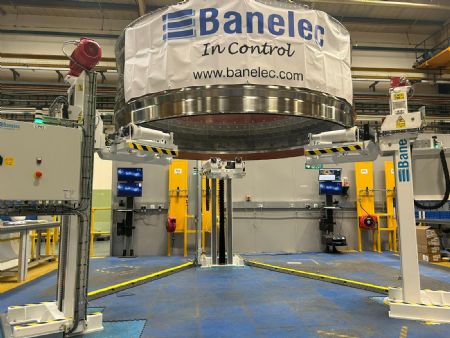
That requirement for scalability is particularly important as manufacturers invest in technologies that may need to remain operational for many years. The electrical control system is often the point at which different technologies ultimately meet, making its design and integration an important consideration in determining how easily a factory can adapt. Banelec’s approach is consequently not limited to standalone control panels or individual automation components. The company provides bespoke electrical control systems alongside automation, robotics, PLC and HMI programming, conveyor controls and Industry 4.0 applications, with engineering support extending from initial design through installation and commissioning.
As manufacturers continue investing in digital transformation, Banelec expects electrical control engineering to become an increasingly strategic discipline rather than simply a supporting function.
The PwC report reaches a similar conclusion from a broader industry perspective: the manufacturers best placed to benefit from the next wave of technology adoption will not necessarily be those buying the greatest number of new tools, but those capable of combining technology, data and interoperable systems effectively.
Mr Banner added: “The businesses moving fastest aren’t necessarily buying the most technology, because they’re investing in engineering that allows everything to work together. That’s where automation delivers its biggest return, the control system becomes the foundation that connects people, processes and technology into one efficient manufacturing operation.”
As UK industry continues its drive towards smarter factories, the distinction between automation leaders and laggards is likely to become increasingly defined not by the number of machines they own, but by how intelligently those machines are connected. For manufacturers considering that transition, the challenge is therefore becoming less about automating one more process and more about creating the control, data and integration infrastructure that allows the entire operation to evolve.