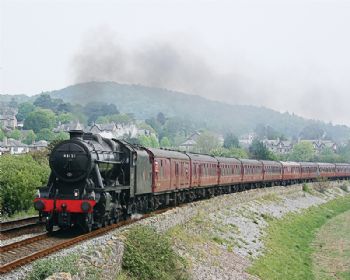
Earlier this month, a steam locomotive headed to the Conwy Valley line to celebrate its re-opening after being closed in March due to extensive flooding.
Bill Kelly, route director (Network Rail Wales and Borders), said: “After months of hard work to repair the flood-damaged line, we were delighted to have re-opened it in time for the National Eisteddfod and to have celebrated with a special steam train trip for passengers to discover the beauty of this line.”
Extensive damage due to flooding, caused by a combination of a high tide and a low-pressure system following storm Gareth, meant that six miles of track, Dolgarrog station, 10 level crossings and nine culverts required significant repair.
Since the closure of the line, teams have removed wash-out materials, replaced ballast, refurbished level crossings, designed and installed flood culverts and constructed embankments to restore the track.
Dolgarrog station will remain closed for the time being, while the flood-damaged platform is replaced.
Despite it being emergency work, Network Rail (
www.networkrail.co.uk) and its project partner Alun Griffiths (Contractors) Ltd used local suppliers for everything from rebar and concrete to food suppliers — including having 9,500 tonnes of rock armour and 3,000 tonnes of ballast delivered from nearby quarries.
Sustainability was a priority for the project, with 91% of the wash-out material removed from site during the project recycled, and about 5,000 tonnes of topsoil re-used on site.