 HT Brigham’s
 origins mirror many long‑established Midlands manufacturers — a single machine, a small workshop and a handful of determined people willing to work around the clock. However, what sets the company apart is the way it has evolved over the years.
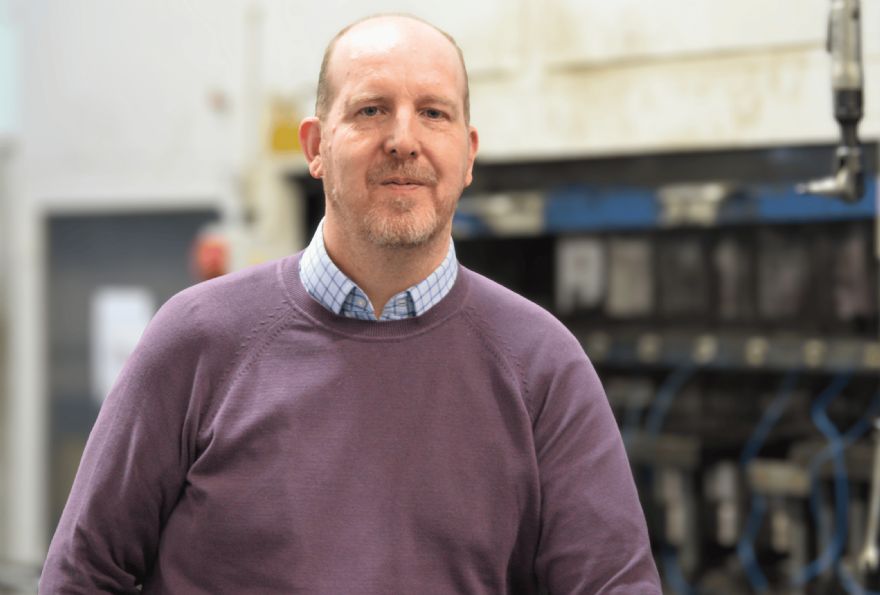
HT Brigham’s CEO Doug Allen said: “The company has changed out of all recognition in terms of technology, data and markets. The core idea is the same as it was in 1947 – make critical parts that customers don’t have to think about and which just work, every time.”
The business specialises in progression presswork, complex multi‑stage transfer pressings and assemblies, supplying components in volumes from tens of thousands to several million. Its customer base spans Tier One automotive suppliers, industrial OEMs and, increasingly, aerospace companies. For Mr Allen, consistency remains the defining attribute.
He said: “We sit in that space where you have to get it right first time, every time. Our customers build production lines around our parts. If we slip, they stop. That clarity of responsibility drives everything – from the way we invest in presses to how we develop our people.”
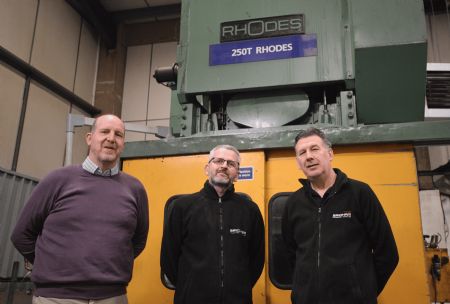
Recent investment has focused on strengthening that reliability and creating capacity for future growth. Central to this is the refurbishment of a 250‑ton
Rhodes progression press, which has been upgraded to modern standards while retaining the robustness that operators value.
Mr Allen said “The Rhodes press is a classic piece of British engineering. New controls, new guarding, new monitoring. We have taken an asset that operators trust and aligned it with modern expectations on uptime, data and safety. Our philosophy is to combine the best of what we have with the best of what is new. You don’t throw away capability that works; you enhance it. That is how you create resilience in a factory — with robust equipment, strong processes and people who understand both.”
This mindset is formalised within the Brigham Operating System (BOS), the company’s internal continuous improvement framework, which links maintenance, quality, training and performance measurement into what Mr Allen calls “a single language for how we run the place.” He added: “If our people are set up to succeed – with the right tools, clear standards and a safe, supportive environment – the performance follows. People first, then process, then profit. In that order.”
Statement of intentThe company’s ambitions in aerospace have been strengthened by the renewal of its AS9100 certification, held alongside ISO 9001, ISO 14001 and IATF 16949. For Mr Allen, whose background includes senior positions at Moog, UTC Aerospace Systems and Goodrich, the accreditation is a statement of intent. He explained: “In aerospace, quality and compliance aren’t initiatives – they are the ticket to the game. AS9100 forces a level of discipline that we welcome. It means our processes, traceability and mindset are aligned with the expectations of primes and Tier Ones.”
He stressed: “Renewing AS9100 isn’t about proving we can deliver aerospace-grade quality with the responsiveness and agility of a mid-size presswork specialist. That is a value proposition customers remember.” The upgraded Rhodes press will play a key role in supporting high‑volume work with the tight tolerances required for aerospace components.
People development remains central to the company’s strategy. One of its flagship initiatives is a Knowledge Transfer Partnership (KTP) with
Birmingham City University, aimed at strengthening new product development and embedding innovation more deeply into the organisation. Mr Allen said: “Partnerships like the one with Birmingham City University are vital. They bring new thinking into our business – from materials innovation to digital product design – while giving young engineers hands-on experience in a live manufacturing environment. It is exactly the kind of collaboration that keeps UK industry evolving.”
The KTP is feeding into a broad portfolio of projects, including work through sister business
Brigham Watch Company to enhance understanding of end‑customer expectations in premium consumer markets. Mr Allen said: “We are trying to build an environment where apprentices, graduates and experienced engineers can all see a future. Whether you are passionate about CAD, tooling design, data analysis or sustainability, there should be a pathway here. That’s how we keep the talent pipeline flowing — by making manufacturing a compelling career, not just a job.”
Despite diversification, HT Brigham maintains the values that shaped its early days as a family business — professionalism, accessibility and a strong sense of community. Mr Allen continued: “Customers come because when there is a problem, they can pick up the phone and speak to someone who understands their product, their line, their pressures. We are big enough to handle complex programmes, but small enough to care about the detail.”
Overcoming forming challengesThe wider Brigham Group emphasises partnership and engineering collaboration over transactional supply. He continued: “If a customer is struggling with a forming challenge, we get in the room, sketch ideas, look at tooling options and understand the lifetime cost. The best relationships are the ones where we are part of the engineering conversation, not just a name on a purchase order.”
Looking to the future, Mr Allen is clear about the pressures facing UK manufacturers – and how to respond to them. He said: “Innovate and invest in internal capability. That is the only way I see long-term survival. We can’t wait for policy or rely on someone else’s technology roadmap. We have to take control of our own.” For HT Brigham, that means continued investment in equipment and data, strengthening sector credentials in regulated industries such as aerospace, and growing its people through apprenticeships, KTPs and closer links with universities and customers.
Mr Allen concluded: “Ultimately, we want to be the presswork partner people think of when the job really matters. High-volume, high-integrity, no drama. If we can keep delivering that – with a smile on our faces and opportunities for our people — then we are doing our job for British manufacturing.”
In Coleshill, the presses continue running, parts continue shipping and the next generation of engineers is finding its feet. HT Brigham may not command the same attention as the global brands its components support, but it remains one of the quiet, highly capable manufacturers that keep modern industry moving.